
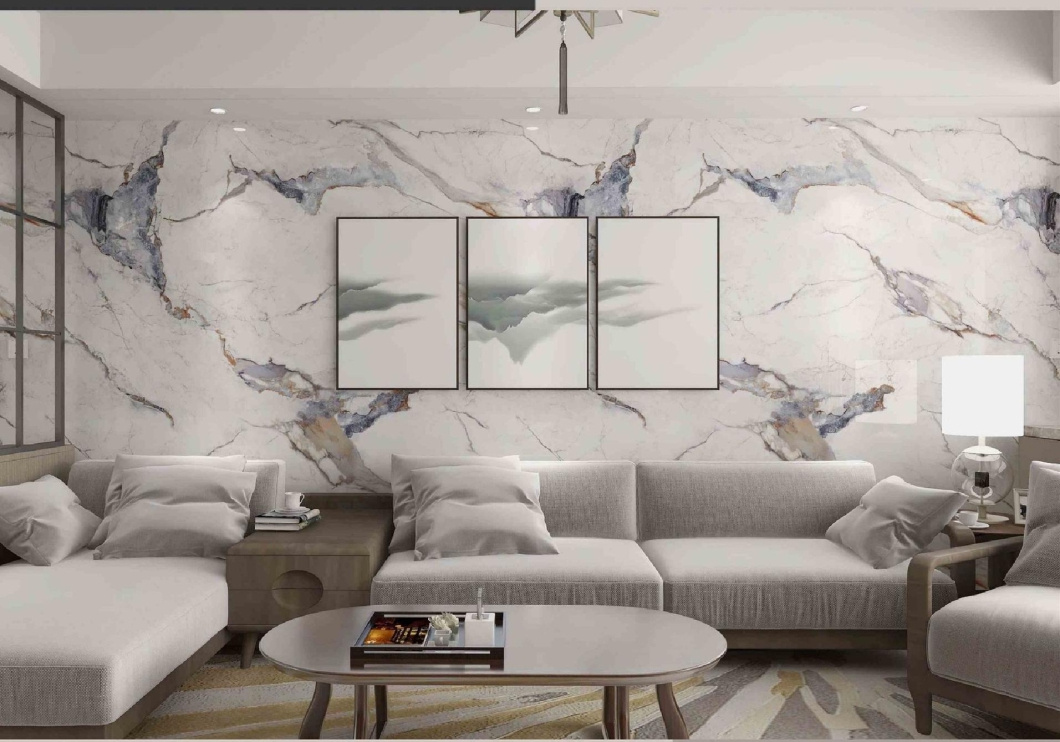
There is a moment in Chinese ink painting where the ink spreads into wet paper and pools in formations that no brush could have planned — dark clouds gathering, mountain shadows dissolving into mist. The SD-AGWP034 Calacatta Viola colourway reproduces that moment in stone: slate-blue mineral formations pooling across a white crystalline ground, amber-gold veins tracing their paths through the blue like rivers through mountain terrain, fine grey fracture lines mapping the geological stress of a surface that looks as much painted as quarried. Hung with three Chinese ink wash landscape paintings — clouds, mist, distance — this living room wall is making an explicit conversation between the stone on the wall and the art on the stone: both are depictions of the same natural world, one rendered in pigment, one grown in the earth over a million years. The SD-AGWP034 Calacatta Viola is the correct panel for an interior that understands this conversation.
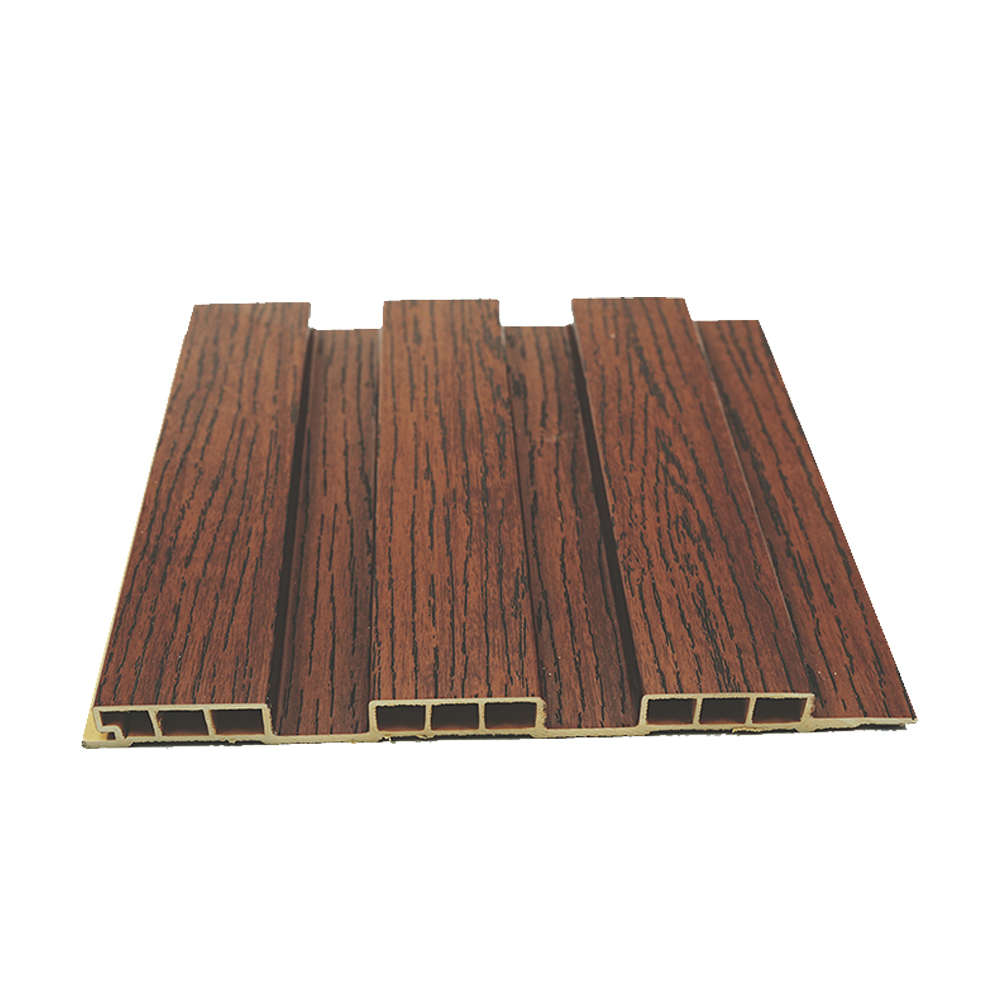
The SD-AGWP029 introduces a profile detail that no other panel in the SD-AGWP series carries: a fine centre groove cut into the crown of each wide flat-top batten. The effect is precise and intentional — each batten's flat top is divided by a narrow notch into two slightly raised shoulders, adding a secondary shadow line at the rib crown that runs parallel to the primary channel shadows between battens. Where a plain flat-top batten reads as a single surface element, the SD-AGWP029's crown-grooved batten reads as a composed detail — a panel that has been given one more degree of considered articulation than the standard square batten format. The deep rosewood finish amplifies this quality: the bold, open-grained red-brown woodgrain with its dark figuring lines is the most visually rich and chromatic surface in the SD-AGWP range, a finish that reads as genuinely warm and materially luxurious rather than neutral or restrained.
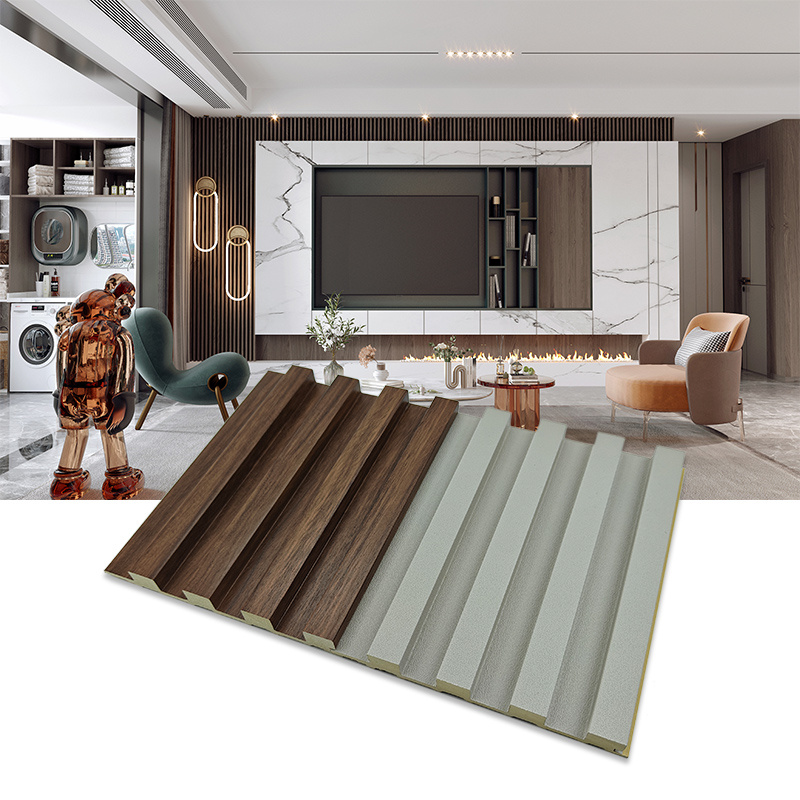
The SD-AGWP032 introduces a panel format that no other product in the SD-AGWP series offers: a single panel that carries two colours simultaneously. Left half dark walnut, right half sage greige — the colour transition running down the panel's length as a clean, precise material boundary that divides the panel face into two equal tonal zones. Installed in continuous vertical runs, this dual-tone construction enables a wall surface that graduates from dark to light, from warm to cool, without requiring any junction detail, trim strip, or design intervention — the colour transition is built into the panel itself. The narrow-pitch multi-flute profile adds directional texture and shadow depth across both colour zones, the rib geometry reading consistently whether in the dark walnut or sage greige half. The installation scene shows the dark walnut colourway deployed as a full-height accent zone to the left of a Calacatta marble TV wall — a material combination that is one of the defining visual signatures of current premium Chinese residential design.
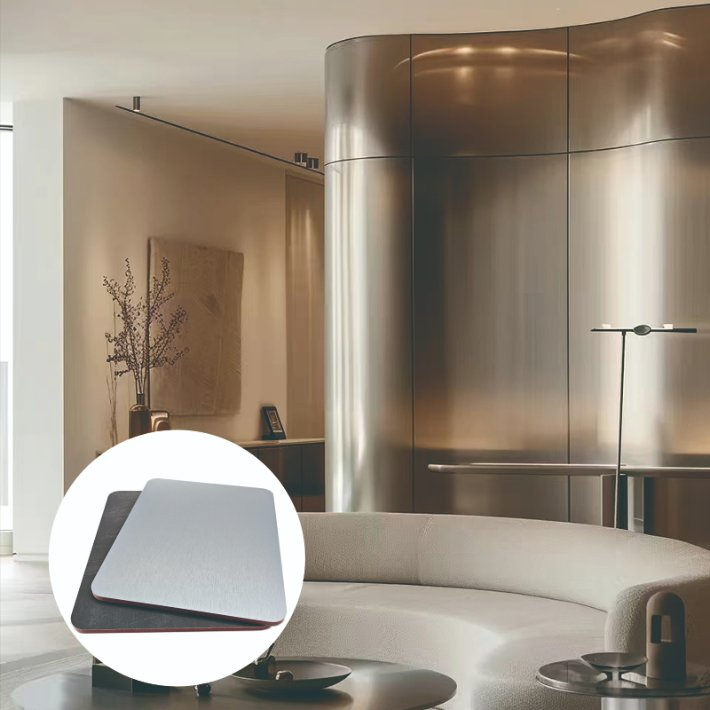
A curved wall is one of the most demanding and most impressive design moves in contemporary interior architecture — and the material that covers it defines whether the curve reads as a confident architectural gesture or an awkward structural compromise. The SD-AGWP031 in brushed metallic finish is shown here wrapping a full-height curved partition column in a premium residential living room, the warm champagne-silver surface catching and redistributing light continuously around the curve's changing angle, the panel joints reading as fine controlled lines that articulate the surface without interrupting the curve's flow. The result is the kind of wall finish that is normally associated with bespoke metal cladding or high-specification aluminium composite panel systems — here delivered as an installation-ready WPC or composite panel product that is workable, lightweight, and joinable without specialist metal fabrication trades.
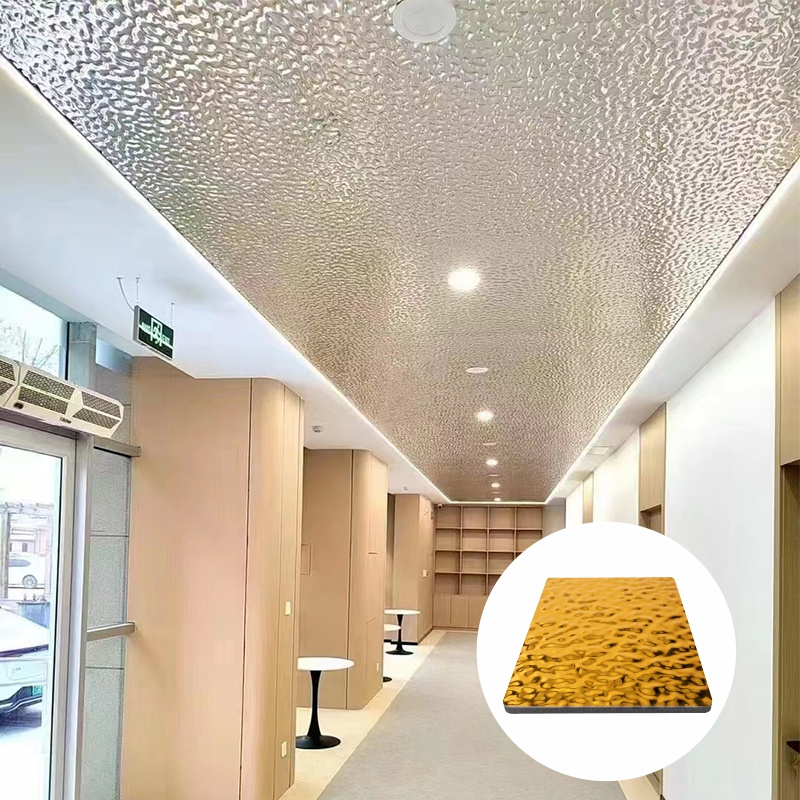
Walk the length of this corridor and the ceiling above you is not a surface — it is a landscape. The SD-AGWP033 in hammered amber gold covers the entire ceiling of a commercial corridor as a single continuous field of metallic ripple: ten thousand micro-facets pressed into the panel face, each one catching the recessed downlights at a slightly different angle, so the ceiling is never still, never flat, never the same from two positions in the room. Under the warm recessed lighting, the amber-gold tones of the panel shift towards champagne silver, the warm gold ground reading as a cooler metallic shimmer at ceiling scale — an effect that is impossible to replicate with paint, wallpaper, or conventional ceiling tile, and which the SD-AGWP033 delivers as a fully installed, seamless, large-format panel system. The hammered texture performs the additional function of making every panel join invisible: the continuous ripple pattern absorbs seam lines into its own surface geometry, so the ceiling reads as one uninterrupted metallic field from entry to far end of the corridor.
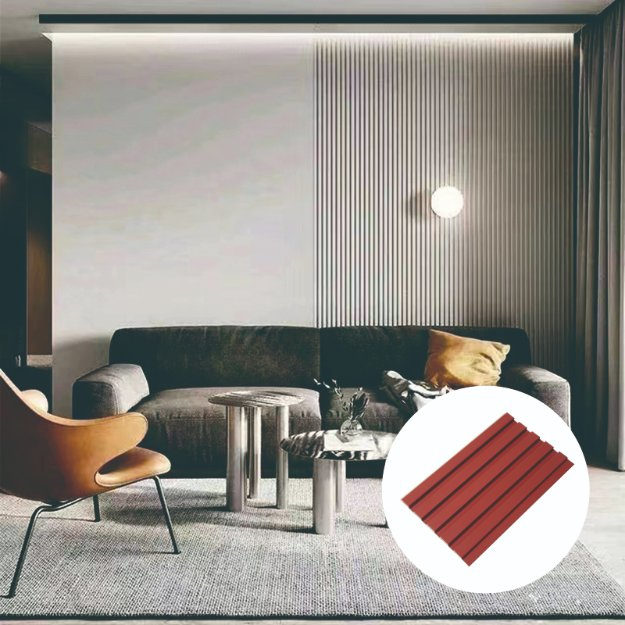
The SD-AGWP026 makes a statement with five wide, shouldered battens. The SD-AGWP027 makes a different kind of statement entirely — with more battens, narrower, more closely pitched, producing a wall surface whose rhythm is fine enough to read as texture from across a room and precise enough to reward close inspection as individual elements. The narrow-pitch fine batten profile is the contemporary interior design equivalent of vertical shiplap or closely-spaced timber slat cladding: a surface that is directional, calm, and architecturally refined without requiring any decorative elaboration beyond the geometry itself. In the installation scene — a modern Scandinavian-influenced living room with warm leather, dark upholstery, and a globe pendant — the panels in a light grey-white tone occupy the right wall as a full-height feature, their fine vertical rhythm providing the room's only surface texture while the palette remains entirely neutral. The brick red sample confirms that the same narrow-pitch geometry is available in bold colour, repositioning the same profile from calm Nordic restraint to warm contemporary accent.
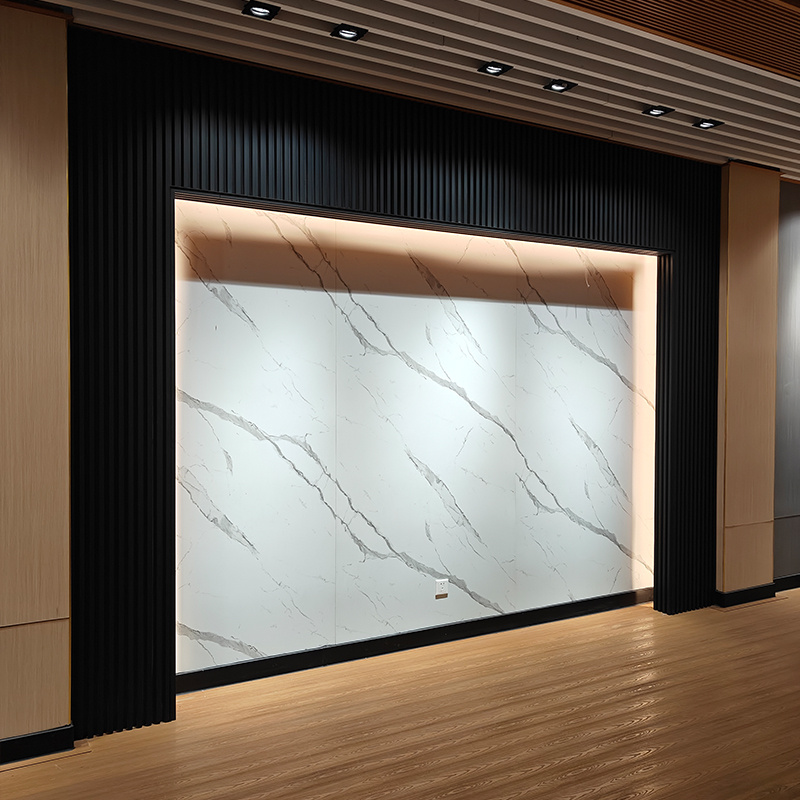
This is not a render. The SD-AGWP033 installed in a real commercial lobby space, three panels wide, framed by a shadow-box surround of black narrow-flute WPC batten panels with warm LED cove lighting recessed at the top — and the result speaks for itself. The continuous grey vein of the Calacatta pattern sweeps across all three panels as a single uninterrupted geological line, the near-invisible seams between panels disappearing entirely at normal viewing distance. The warm LED cove light at the recess head illuminates the white marble ground from above, the gloss panel surface distributing the warm light downward as a soft, even glow that makes the entire marble wall appear to be internally lit. The black batten surround frames the marble zone as a picture within the room — a deliberate compositional move that is only possible because the SD-AGWP product family includes both flat marble panels and profiled batten panels in a coordinated product system.
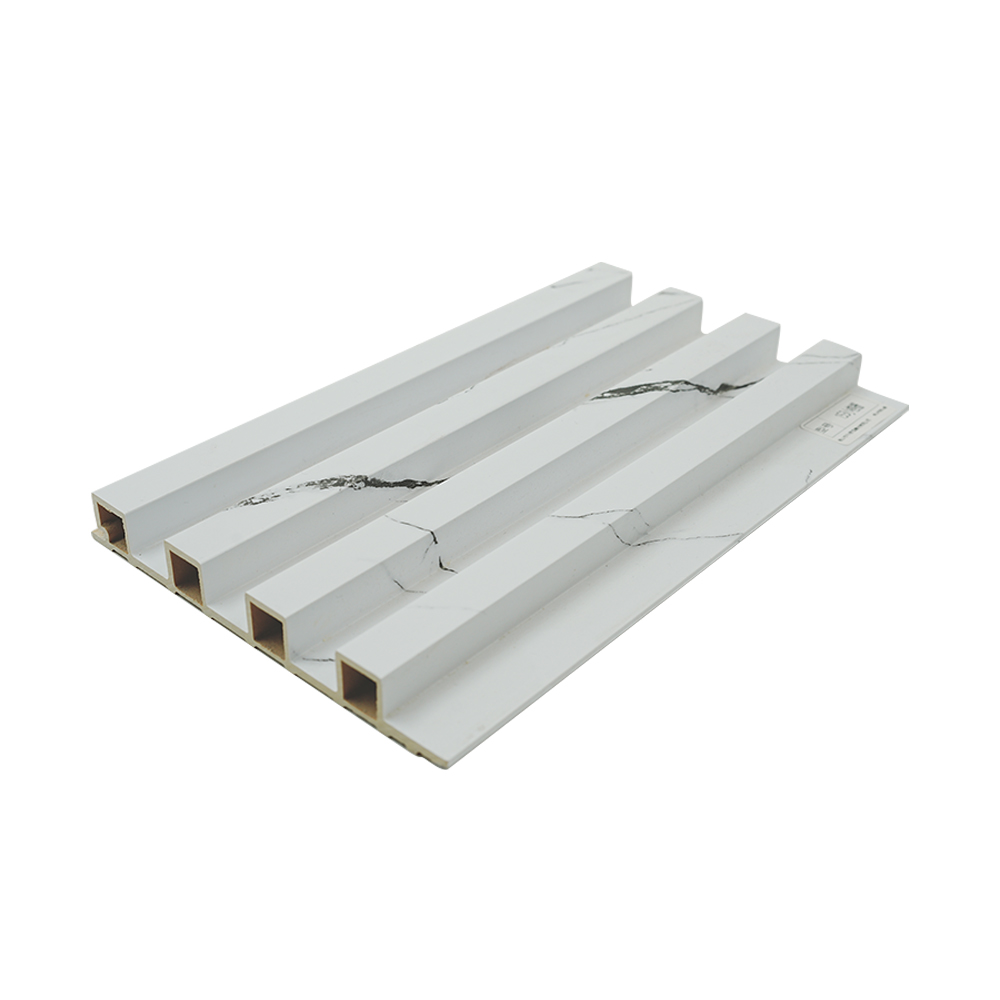
If the SD-AGWP024's dense reeded profile is about rhythm and texture, the SD-AGWP025 is about geometry and material drama. Four to five wide, square-profile batten ribs — each with a flat top, crisp vertical sides, and a deep flat-bottomed channel between them — run the full panel length in a widely spaced arrangement that reads as bold architectural grid work rather than surface texture. The profile references the slatted timber wall panels and batten cladding systems that have become a defining feature of contemporary luxury residential and hospitality interiors, but delivers them in a maintenance-free, moisture-resistant composite format with a surface finish that fundamentally reframes the material conversation: Calacatta-style white marble, with the characteristic dark grey-black lightning-vein pattern of the finest Italian stone, printed or laminated across every batten face and channel floor. The result is a wall panel that combines two of the most commercially powerful interior design material references of the current decade — the slatted batten wall and the Calacatta marble surface — into a single, installation-ready panel system.
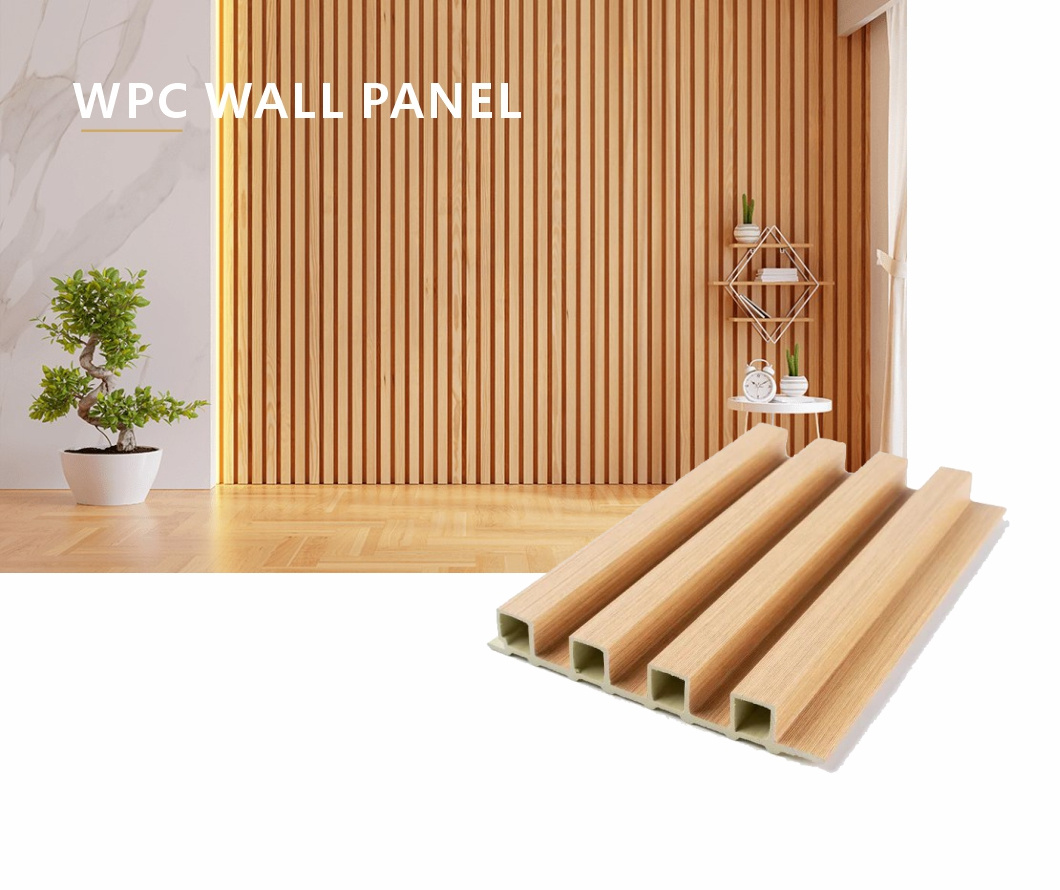
There is a specific quality that only a wide-spaced, deep-channelled batten wall achieves — the sense that you are looking at a wall that has been genuinely constructed, layer by layer, rather than simply surfaced. The SD-AGWP028 delivers that quality through the most structurally honest profile in the SD-AGWP series: four wide square-section battens, each a hollow WPC extrusion with a perfectly flat top, crisp vertical sides, and a deep open V-channel between each rib that drops all the way to the base plate. No curved shoulders, no stepped crowns, no surface elaboration — just four clean square tubes, evenly spaced, in honey oak woodgrain, installed vertically across a wall. The installation scene shows what this restraint achieves at scale: a full-height living room wall that reads as a composed, natural timber grid — warm, rhythmic, and materially authentic — with a bonsai and a white marble background as its only companions.
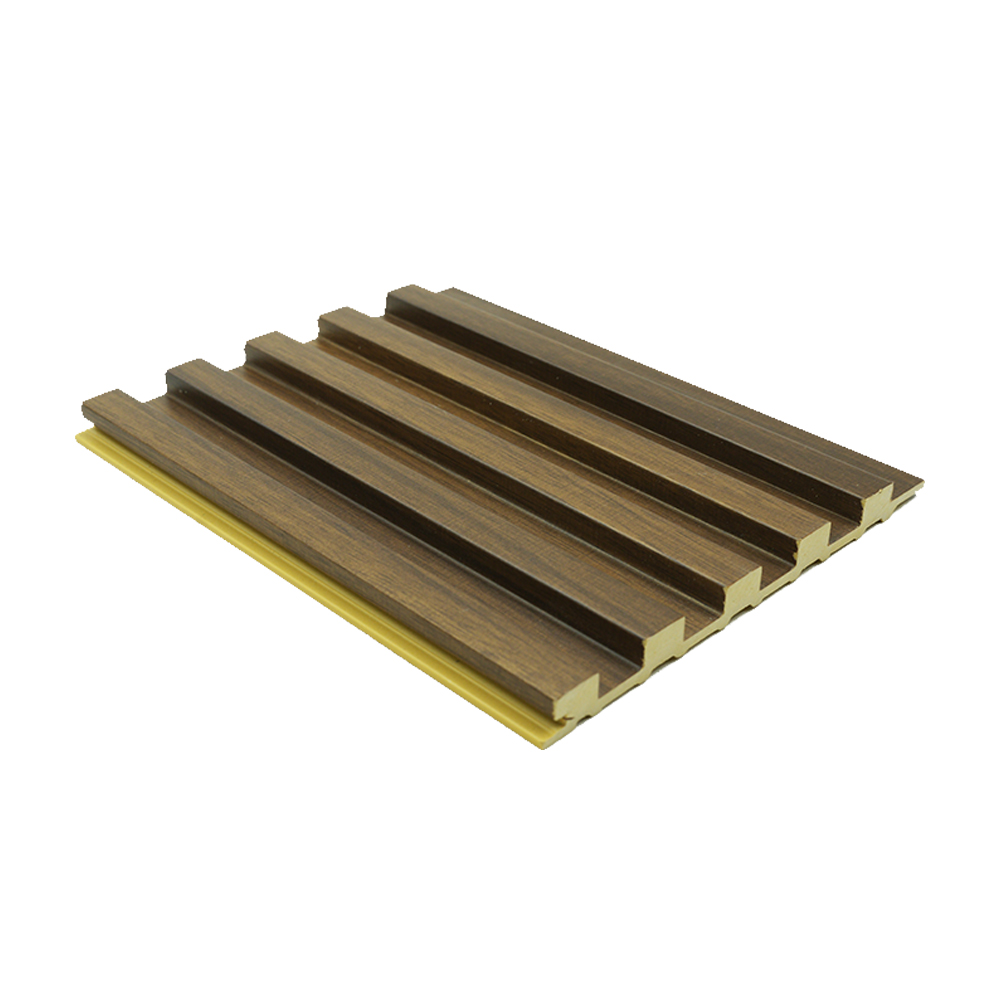
The SD-AGWP026 takes the square batten format of the SD-AGWP025 and gives it a new dimension — literally. Where the SD-AGWP025's battens are uniform-height square profiles, the SD-AGWP026's battens are stepped: each rib has a narrow raised shoulder at its crown that steps down to a wider flat top, creating a T-profile or shouldered batten cross-section that casts a more complex shadow pattern than a plain square rib. The result is a wall panel that reads with greater depth and visual hierarchy than any flat-top batten system — the shadow under each shoulder step adds a second layer of horizontal accent line to the primary rib-and-channel geometry, giving the installed surface a crafted, joinery-quality presence that is closer to machined solid timber than to a surface panel product. Five wide battens with deep open channels between them give the SD-AGWP026 a bold, widely-spaced rhythm — fewer, larger elements read from across a room as deliberate architectural features rather than surface texture.
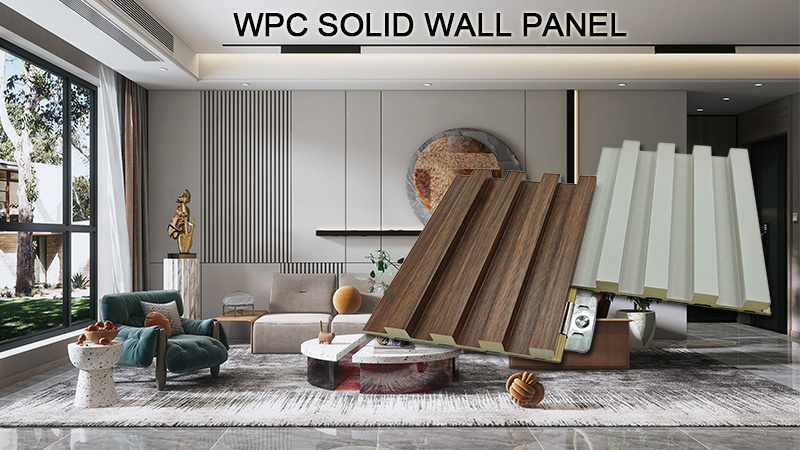
Three words on this product image settle questions that profile shots alone cannot answer: WPC Solid Wall Panel. Not hollow-core. Not composite sandwich. Solid WPC — wood-plastic composite material extruded as a dense, uniform solid section throughout the full batten profile. The structural difference matters: a solid WPC batten has a more substantial hand, a more authentic timber-like density when tapped or handled, a more even surface hardness across the full rib face, and no risk of hollow-sound resonance on the installed wall. The open-book panel arrangement in this image shows the cut edge clearly — the material is consistent and dense from face to base, the champagne gold base plate the only separate element. The visible metal installation clip confirms a hidden clip-rail fixing system, meaning no surface nails, no visible fixings, and a fully cleanable flat wall face at every panel and channel surface.
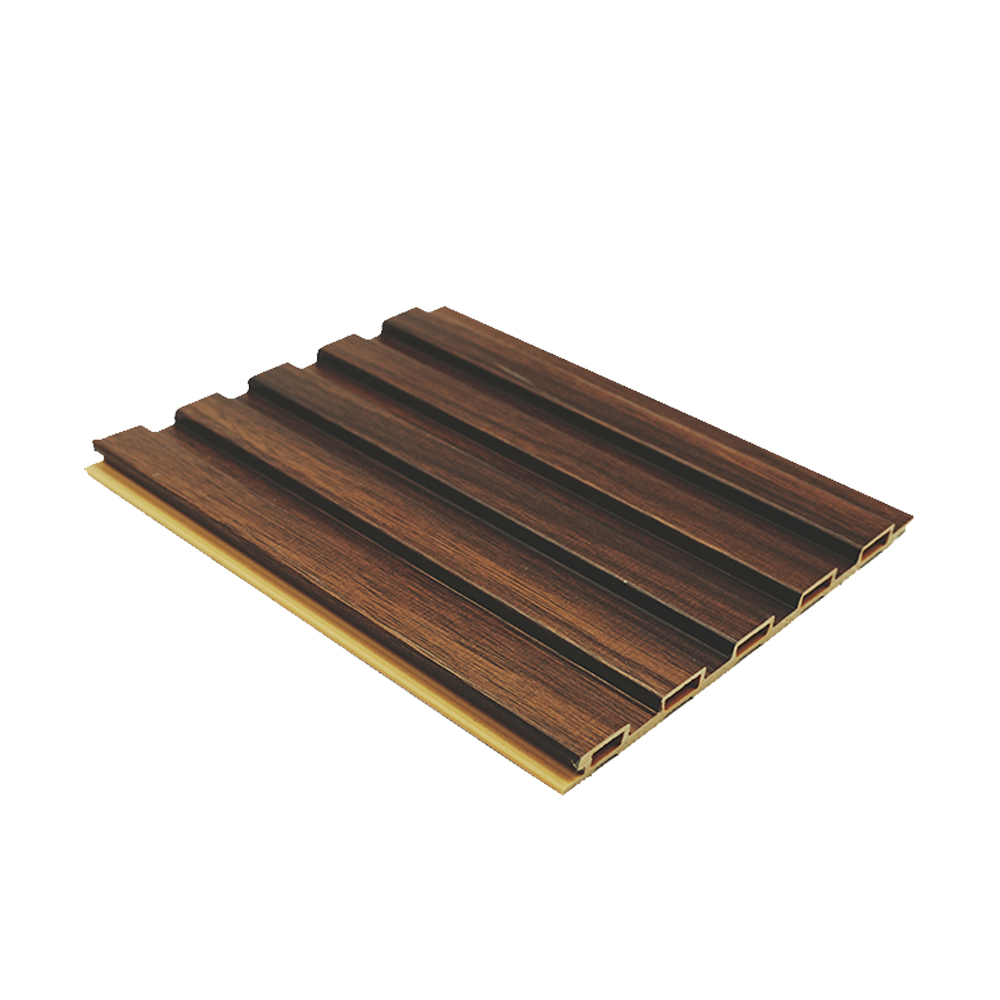
Wide-Pitch Curved-Shoulder Batten Decorative Wall Panel in Dark Rosewood Woodgrain | WPC Hollow-Core
he SD-AGWP026 steps. The SD-AGWP027 curves. Where the SD-AGWP026's shouldered batten profile transitions from crown to face via a hard angular step, the SD-AGWP027 softens that same geometry into a smooth curved shoulder — the batten crown arcs gently outward before settling into the wider flat face, the transition rounded rather than cornered. It is a subtle distinction in cross-section that produces a meaningfully different installed wall character: the SD-AGWP026 reads as architectural and precise; the SD-AGWP027 reads as crafted and warm. Five wide battens with deep open channels between them maintain the bold, wide-spaced rhythm of the series — each batten substantial enough to read as an individual element from across a room — but the curved shoulder softens every vertical rib into something closer to turned timber or hand-finished joinery. The WPC hollow-core construction, confirmed by the visible square hollow chambers in the side section, delivers the structural performance of a dense panel at a fraction of solid timber weight.
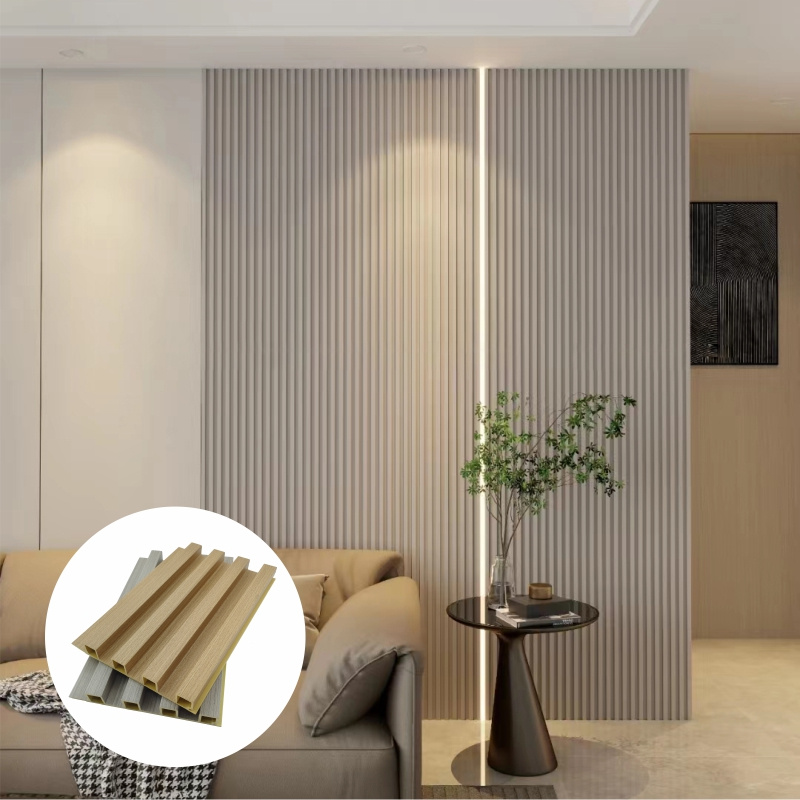
The living room in this installation scene is defined by a single design decision: a full-height wall of light grey WPC batten panels, divided precisely at centre by a floor-to-ceiling LED linear light strip. The LED line does not decorate the wall — it activates it. The vertical light column bisects the batten surface, the warm glow catching the rounded square rib edges on both sides and casting a gradient of illumination that diminishes symmetrically across the panel runs to either side. The result is a wall that reads as both architectural surface and lighting element simultaneously, with no additional custom fabrication, no recessed lighting channel, and no specialist installation beyond placing the LED strip at the panel junction seam. This is the SD-AGWP028's most commercially compelling application: a full-height batten wall with integrated linear light that produces a five-star hospitality aesthetic from a single, installation-ready panel system.
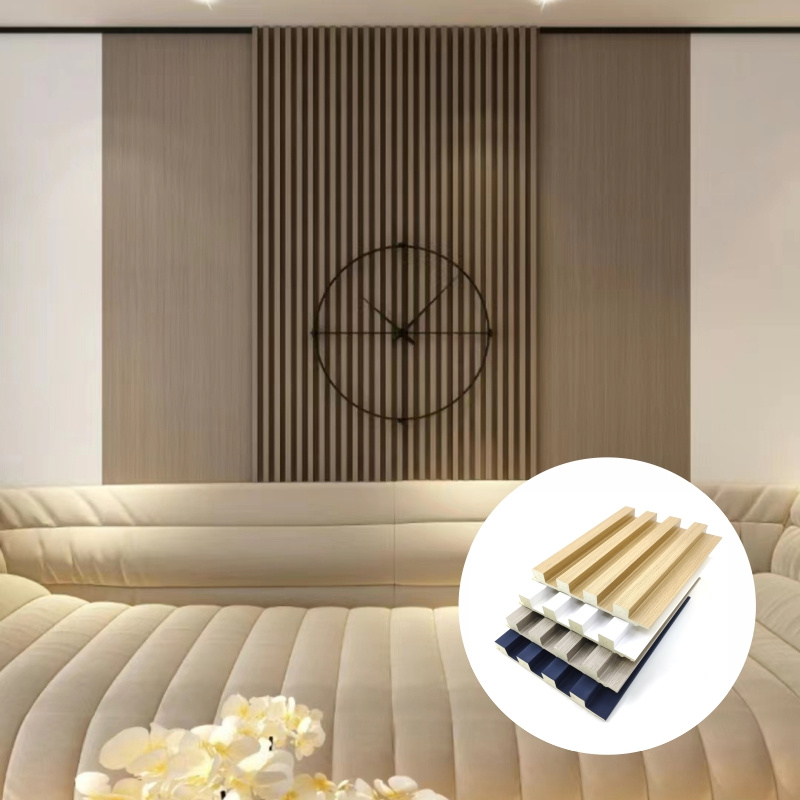
Some wall panels add texture. The SD-AGWP026 adds architecture. Five wide, stepped-profile battens — each with a shouldered crown that steps down to a broader flat face before dropping into a deep open channel — are arranged across each panel at a bold, deliberate pitch that reads as designed joinery rather than surface cladding. The stepped profile is the key detail: where a plain square batten casts one shadow line at its channel edge, the SD-AGWP026's shouldered step adds a second, finer shadow line at the crown transition, giving each batten a multi-plane three-dimensionality that amplifies the wall surface's depth under any directional light. The installation scene — a curved, cream-upholstered hospitality lounge with the panels in natural oak tone running full-height behind an oversized wall clock — shows precisely what this panel does at scale: it transforms a plain wall into a composed architectural backdrop, one whose vertical rhythm and material warmth carry the entire room's design register without any additional decoration.