
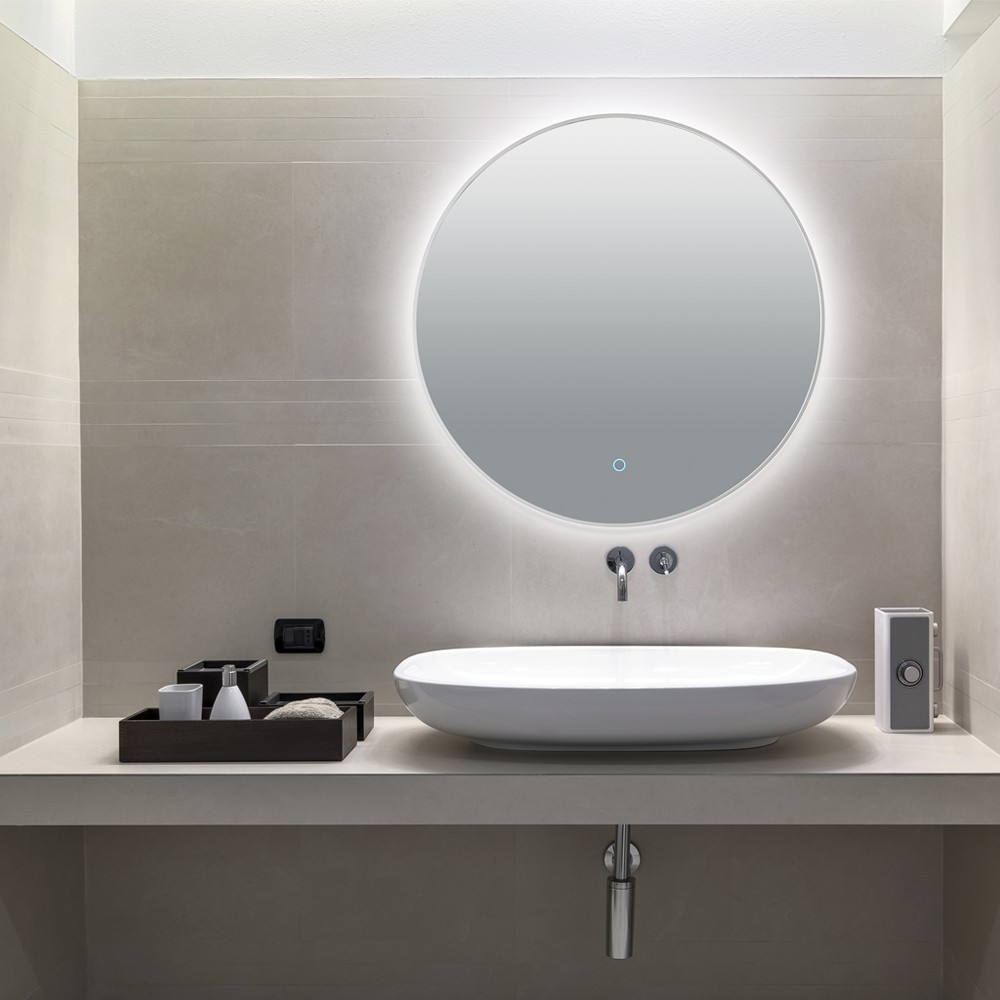
The same circle, without the line — the SHUIDAO M009A is the frameless companion to the M009, sharing identical proportions and the same full-perimeter cool-white LED backlight but removing the matte black frame entirely. The glass edge is the boundary. The halo is the form. Against a warm beige tile wall in a light, airy bathroom, the M009A reads not as a dark-luxury statement but as a luminous disc of pure light — a softer, more ethereal interpretation of the round backlit mirror that suits warm-toned, Scandinavian, and spa-influenced interiors as naturally as the M009 suits its dark counterparts.
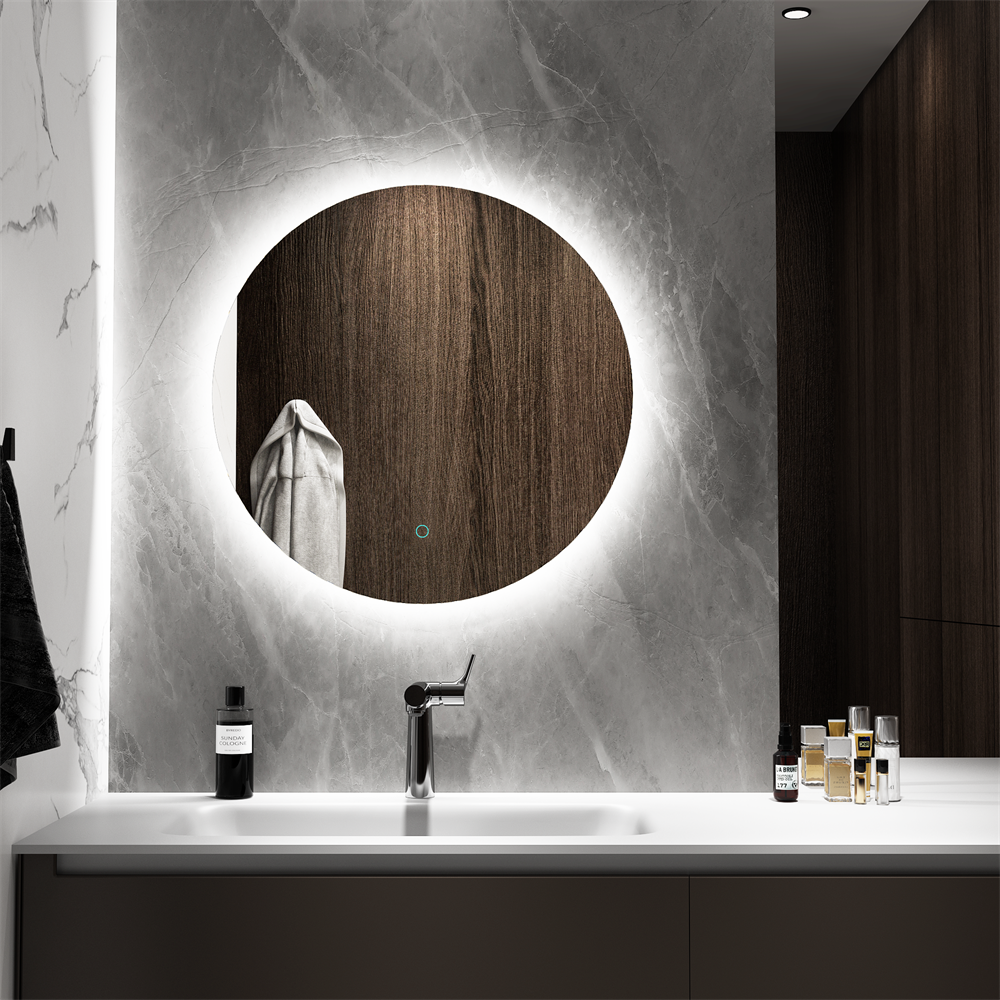
Like a full moon rising from dark stone — the SHUIDAO round LED backlit mirror transforms any bathroom wall into a luminous focal point. Mounted against a dramatic grey-veined marble surface, the large circular glass disc disappears into its own halo, projecting a soft corona of cool-white light that sculpts the stone texture behind it and renders the mirror itself as pure, floating light.
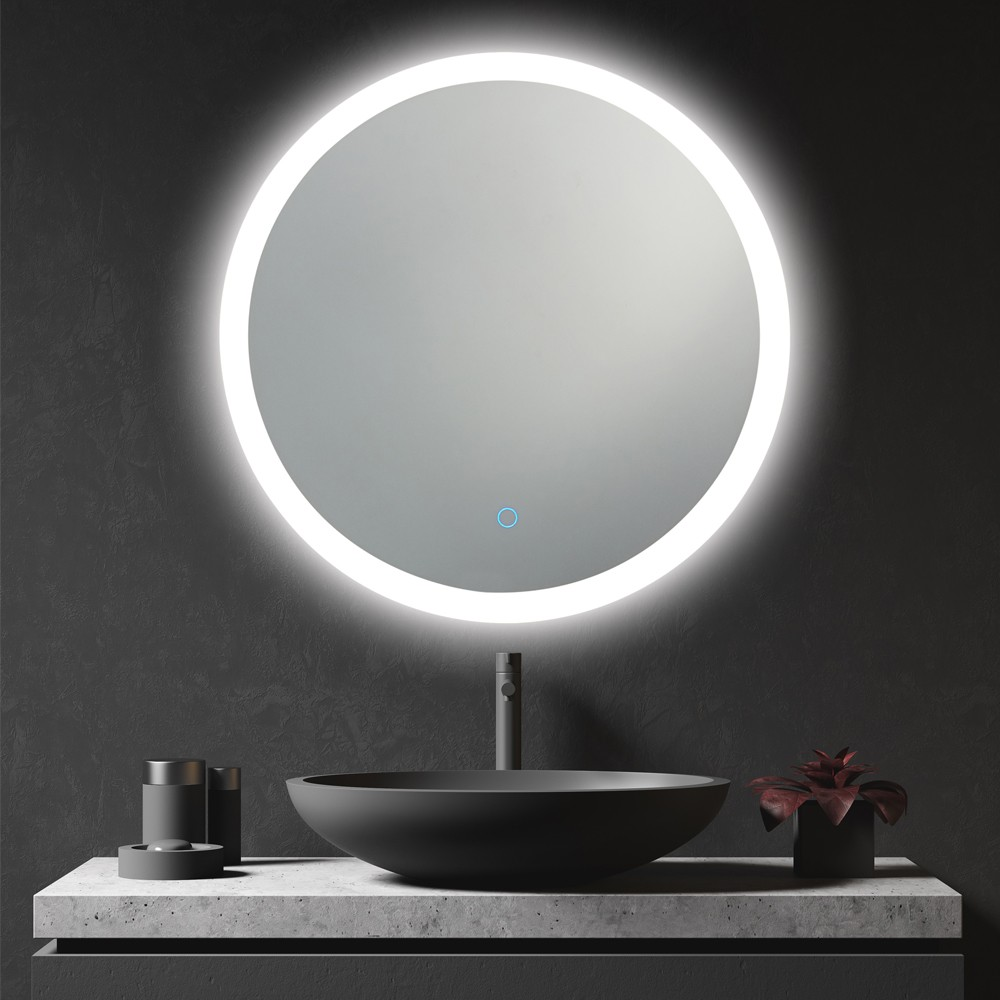
The most luminous expression of the circle — the SHUIDAO M007 takes the round frameless mirror and replaces the conventional backlight halo with a wide, intensely bright front-facing LED border that illuminates from within the glass surface itself. Where the M001 glows behind its frame and the frameless backlit round washes the wall, the M007 burns at the perimeter of the glass — a wide cool-white luminous ring that floods the vanity zone with clinical-grade task light and transforms the mirror into a glowing disc of pure white light against the dark wall.
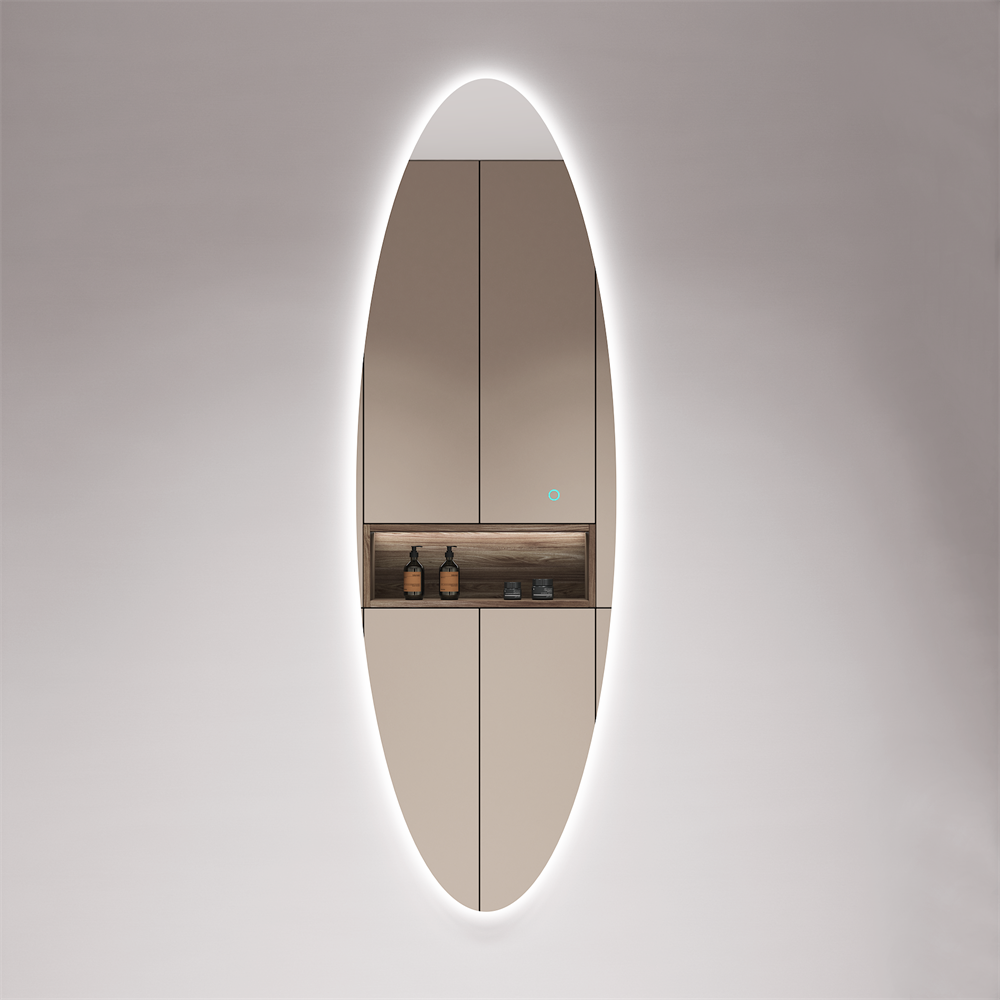
A mirror shaped by nature's own geometry — the SHUIDAO full-length asymmetric oval LED mirror abandons the perfect ellipse in favour of a gently irregular elongated form that tapers toward both ends with a slight lean, evoking a river stone or a leaf caught mid-fall. Mounted flush against a Calacatta marble panel between a warm-oak dressing room and a glass-door wardrobe, it serves the full-length dressing function with a sculptural presence that no rectangular mirror could replicate.
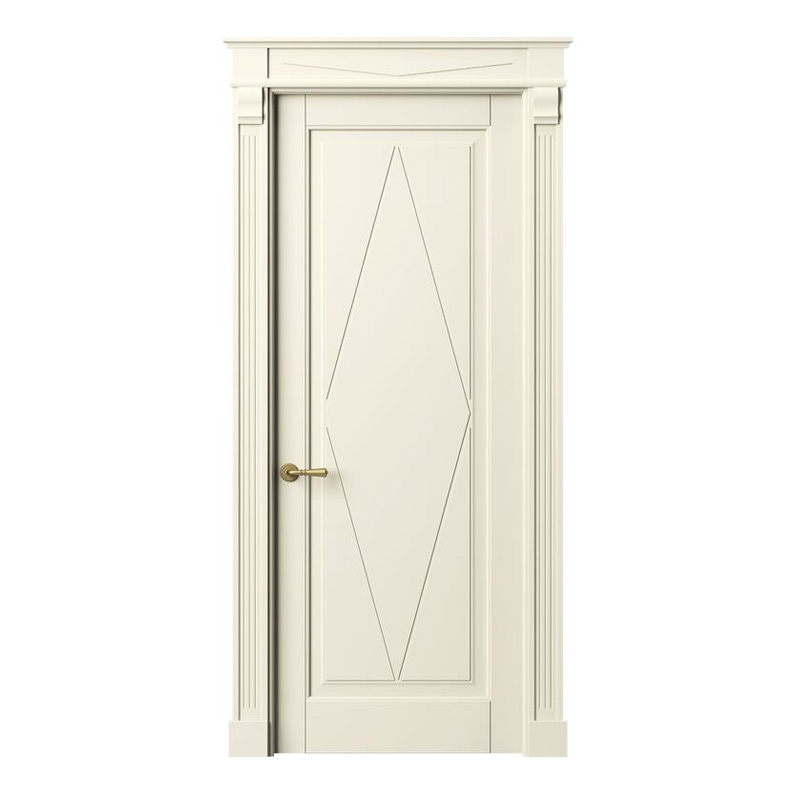
The D8669 placed a repeating diamond lozenge motif within three stacked panels. The D8670 makes a bolder, more singular move: it abandons the multi-panel format entirely in favour of a single full-height panel field, and within that field places one large elongated diamond lozenge that spans nearly the full height and width of the panel — a single graphic shape, drawn in fine routed or applied moulding lines, that turns the entire door face into one unified geometric composition. The diamond here is not the compact, near-square lozenge of the D8669's repeating motif — it is a tall, vertically elongated diamond whose upper and lower points approach the top and bottom panel borders, and whose left and right points reach close to the stile edges; from each corner of the diamond, diagonal lines extend to the four corners of the surrounding rectangular panel border, completing the X-within-rectangle geometry that is the door's entire decorative programme. In warm ivory — a tone that reads as the finest quality aged plaster, or the linen-white of freshly prepared gesso — the routed diamond lines register as the finest possible shadow lines against the light ground, the geometry perceptible but never emphatic. The antique brass lever handle is, again, the perfect single warm accent.
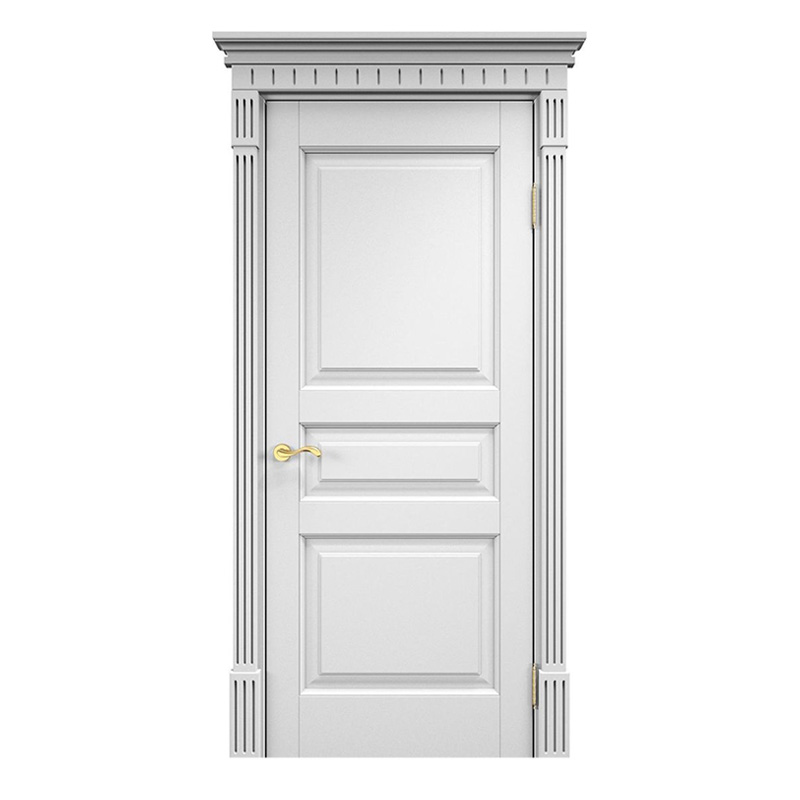
If the D8667 is the warm-stone-grey interpretation of classical architectural joinery — painterly, soft, Southern European in register — the D8668 is its white counterpart, and white here does not mean simple. It means precise. Every element of the D8667's architectural vocabulary is present in the D8668 and then elaborated further: the cornice entablature gains a dentil frieze — a row of closely spaced rectangular tooth-like projections running the full width of the head, one of the most recognisable and formally demanding details in the classical orders; the flat pilaster strips of the D8667 become fully articulated fluted pilasters — columns with vertical carved channels running their full height, the hallmark of Doric, Ionic, and Corinthian classical architecture translated into joinery; and the door leaf itself expands from two panels to three, the three equal-height panels recalling the D8645 and D8647 but here in a white painted finish where the moulding relief reads with crystalline sharpness. The polished brass lever handle is the one warm accent in an otherwise entirely white composition — and against this white, polished brass achieves a luminosity and formality that no other hardware finish can match.
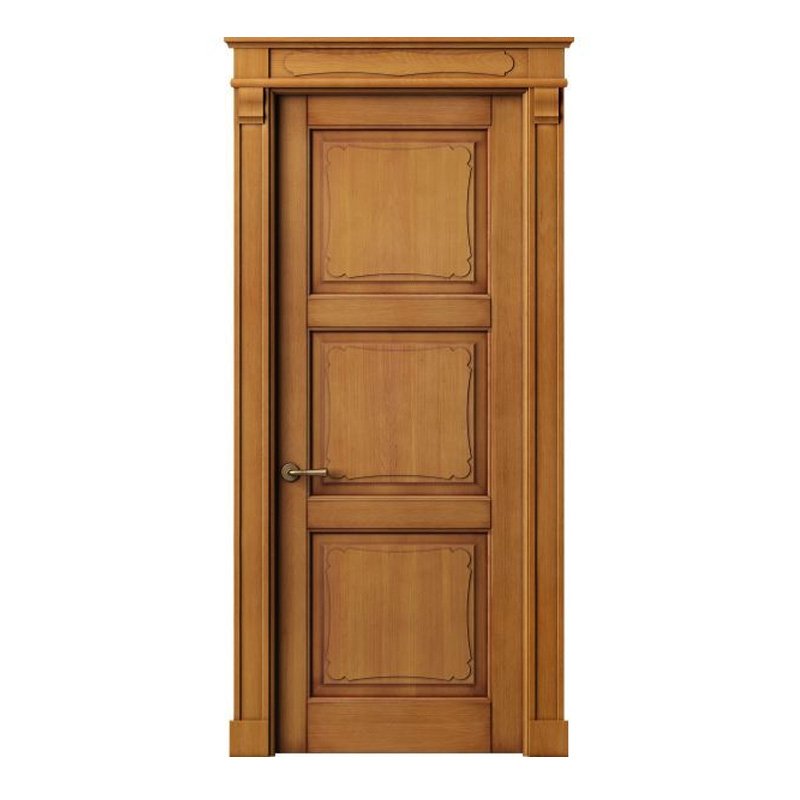
The D8672 is a departure from every other door in the SHUIDAO D86 range — not in degree but in kind. Where the D8645 through D8665 are painted or foil-finished doors that reference classical or contemporary traditions through their surface geometry, the D8672 is something categorically different: a full solid timber door with a complete architectural surround, carved decorative moulding, pilaster columns, a broken-pediment-style entablature head, and plinth blocks at the base — a door assembly that belongs to the language of 18th-century European palace interiors, grand colonial villas, and luxury residential developments where joinery is understood as architecture. The warm honey-amber tone of the timber — a natural teak, oak, or hardwood species with an open, straight grain and a clear or lightly tinted finish — is the finish of real wood that has been worked, not imitated. The carved cartouche moulding within each panel, the bolection moulding rails and stiles, the fluted pilaster columns flanking the door leaf, and the decorative entablature head above all speak a unified classical grammar that no paint finish or foil surface can replicate.
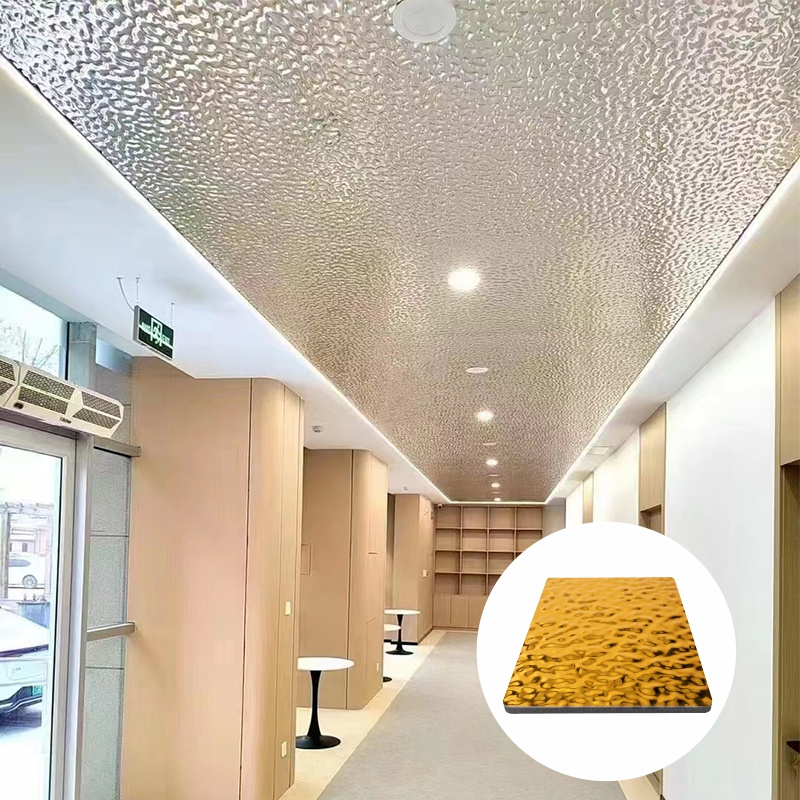
Walk the length of this corridor and the ceiling above you is not a surface — it is a landscape. The SD-AGWP033 in hammered amber gold covers the entire ceiling of a commercial corridor as a single continuous field of metallic ripple: ten thousand micro-facets pressed into the panel face, each one catching the recessed downlights at a slightly different angle, so the ceiling is never still, never flat, never the same from two positions in the room. Under the warm recessed lighting, the amber-gold tones of the panel shift towards champagne silver, the warm gold ground reading as a cooler metallic shimmer at ceiling scale — an effect that is impossible to replicate with paint, wallpaper, or conventional ceiling tile, and which the SD-AGWP033 delivers as a fully installed, seamless, large-format panel system. The hammered texture performs the additional function of making every panel join invisible: the continuous ripple pattern absorbs seam lines into its own surface geometry, so the ceiling reads as one uninterrupted metallic field from entry to far end of the corridor.
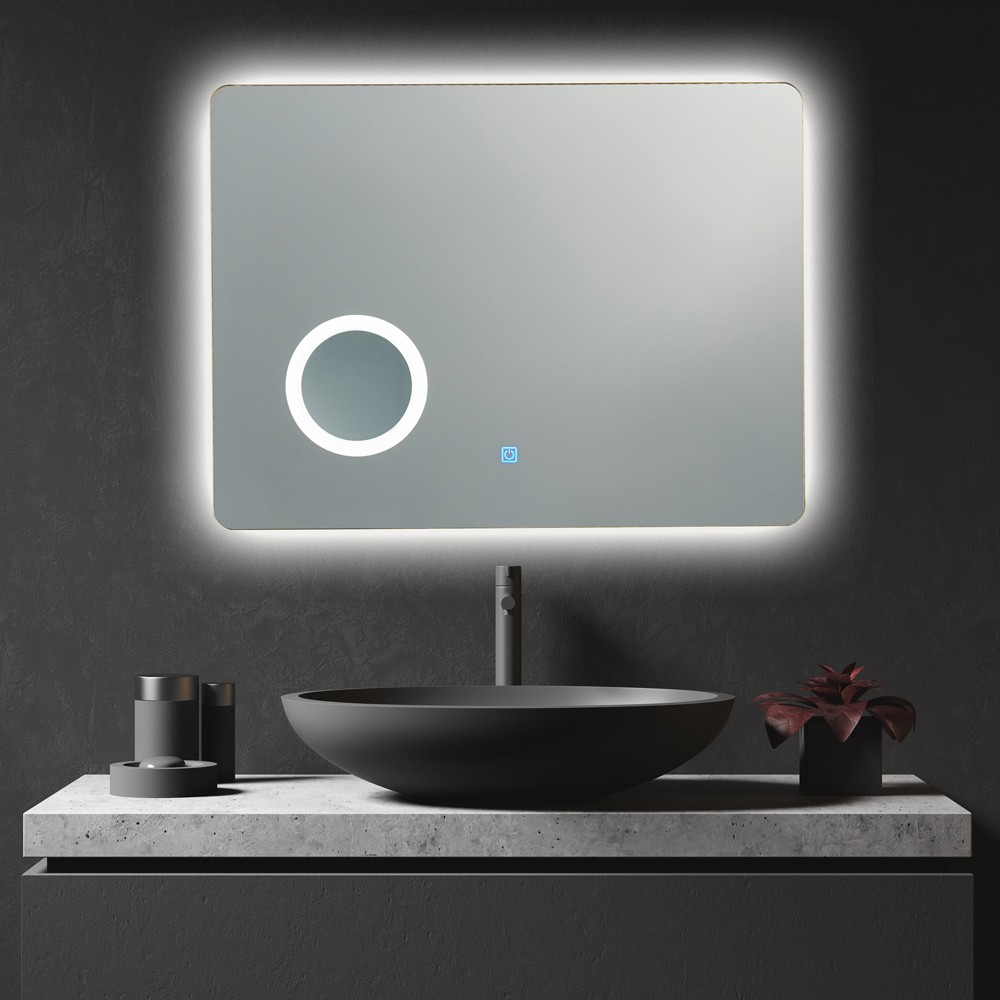
Function elevated to feature — the SHUIDAO M003 takes the wide-format bathroom mirror and adds a single considered detail that transforms it from a reflective surface into a complete grooming system. A landscape rounded-rectangle in a barely-there brushed gold or champagne frame carries a full-perimeter cool white LED halo and an independently illuminated round magnifying mirror inset into the upper-left quadrant — two light sources, two focal distances, one clean object.
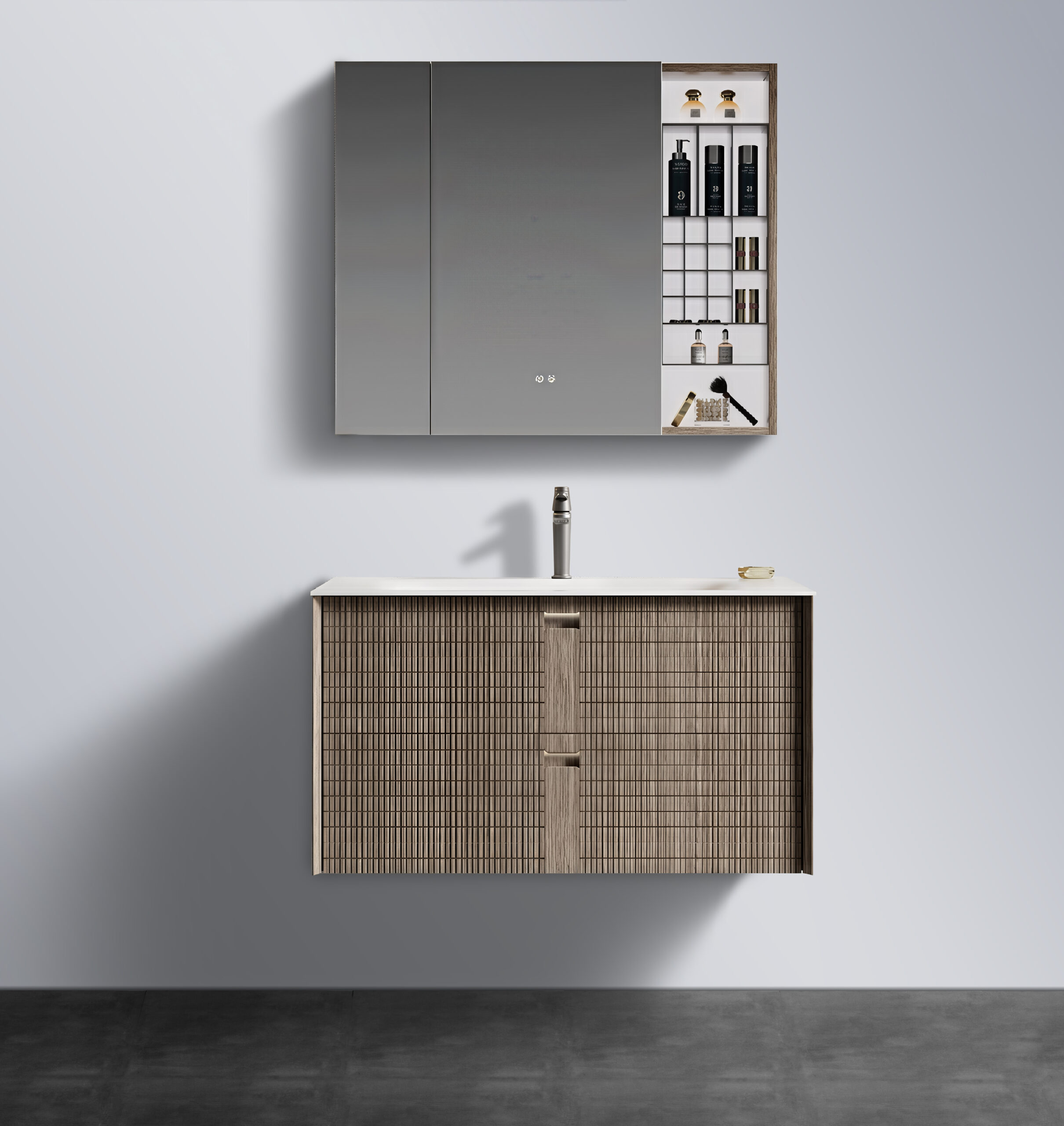
Crafted for those who find beauty in structure — the SHUIDAO BC064 wraps a wall-hung vanity in a precisely woven grid-relief oak surface, its intersecting grooves evoking the quiet geometry of Japanese latticework. Paired with a generously proportioned smart mirror cabinet that opens to reveal a meticulously organized interior, this is a vanity suite designed as much for daily ritual as for lasting visual impact.
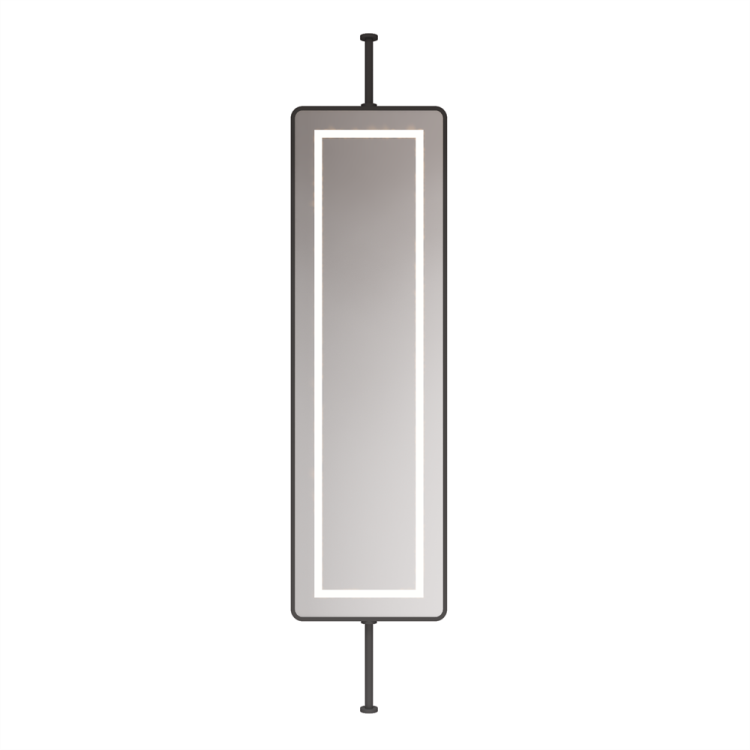
Suspended between ceiling and countertop like a vertical lantern, the SHUIDAO ceiling-mounted LED mirror redefines the bathroom looking glass as a freestanding architectural element. Floor-to-ceiling matte black tubular poles anchor a tall rectangular mirror framed in continuous LED backlight — rotating freely to serve vanity, dressing, and grooming from any angle, in any room configuration.
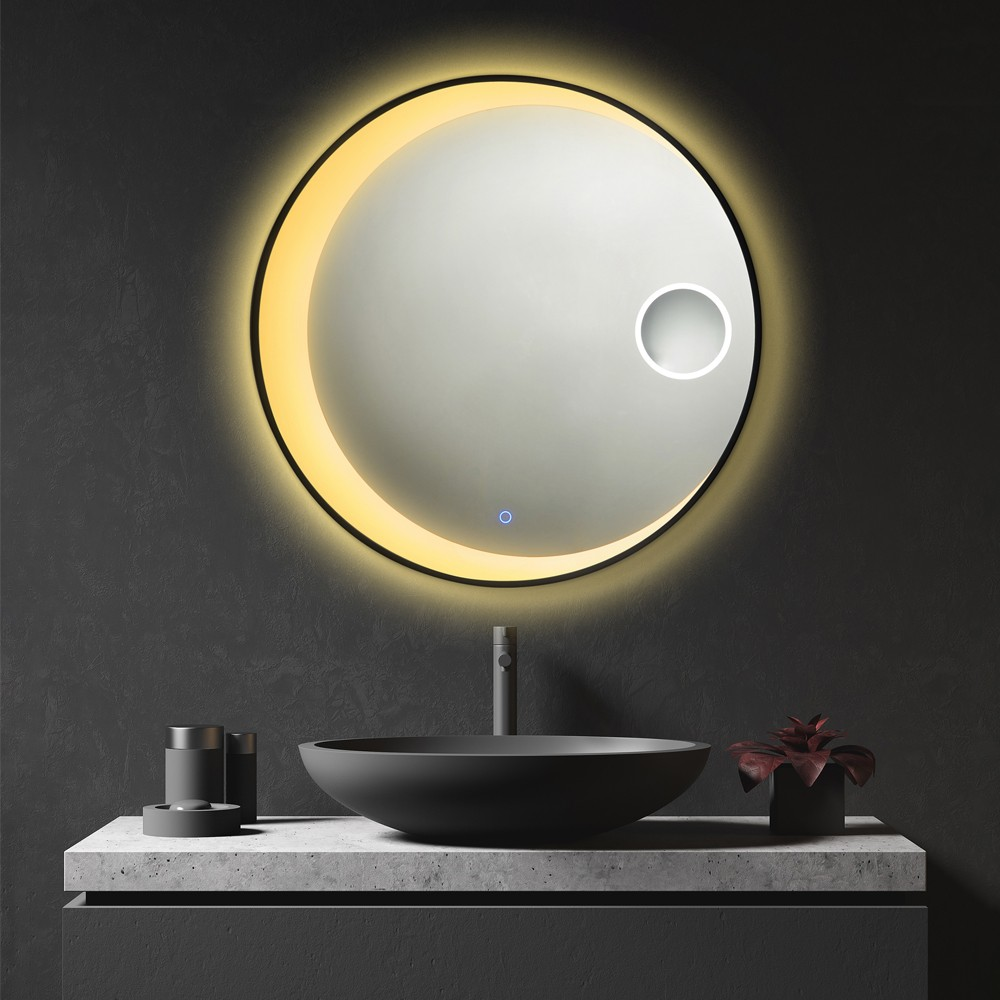
A moon caught in a black ring — the SHUIDAO M001 transforms the familiar round bathroom mirror into a celestial light object. A slim matte black circular frame contains a large round mirror whose inner LED strip traces not the full perimeter but a sweeping crescent arc across the lower-left quadrant, casting a warm amber glow that mimics the waxing moon at its most dramatic. An integrated magnifying spot on the upper-right completes a mirror designed as much for atmosphere as for function.
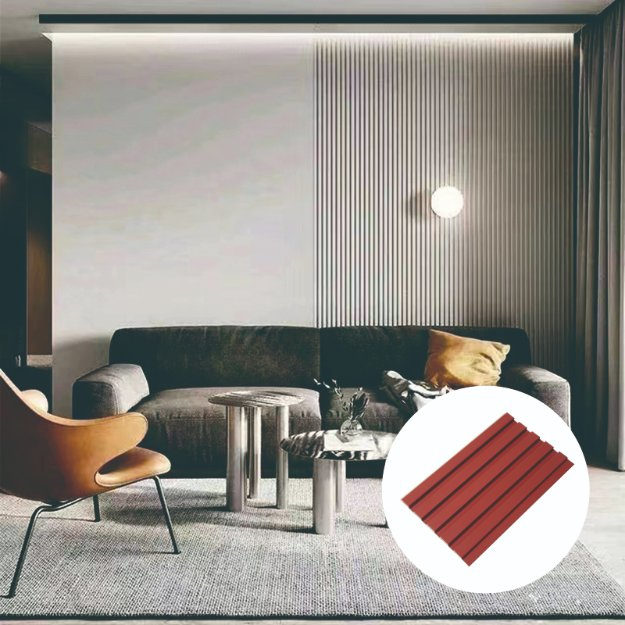
The SD-AGWP026 makes a statement with five wide, shouldered battens. The SD-AGWP027 makes a different kind of statement entirely — with more battens, narrower, more closely pitched, producing a wall surface whose rhythm is fine enough to read as texture from across a room and precise enough to reward close inspection as individual elements. The narrow-pitch fine batten profile is the contemporary interior design equivalent of vertical shiplap or closely-spaced timber slat cladding: a surface that is directional, calm, and architecturally refined without requiring any decorative elaboration beyond the geometry itself. In the installation scene — a modern Scandinavian-influenced living room with warm leather, dark upholstery, and a globe pendant — the panels in a light grey-white tone occupy the right wall as a full-height feature, their fine vertical rhythm providing the room's only surface texture while the palette remains entirely neutral. The brick red sample confirms that the same narrow-pitch geometry is available in bold colour, repositioning the same profile from calm Nordic restraint to warm contemporary accent.
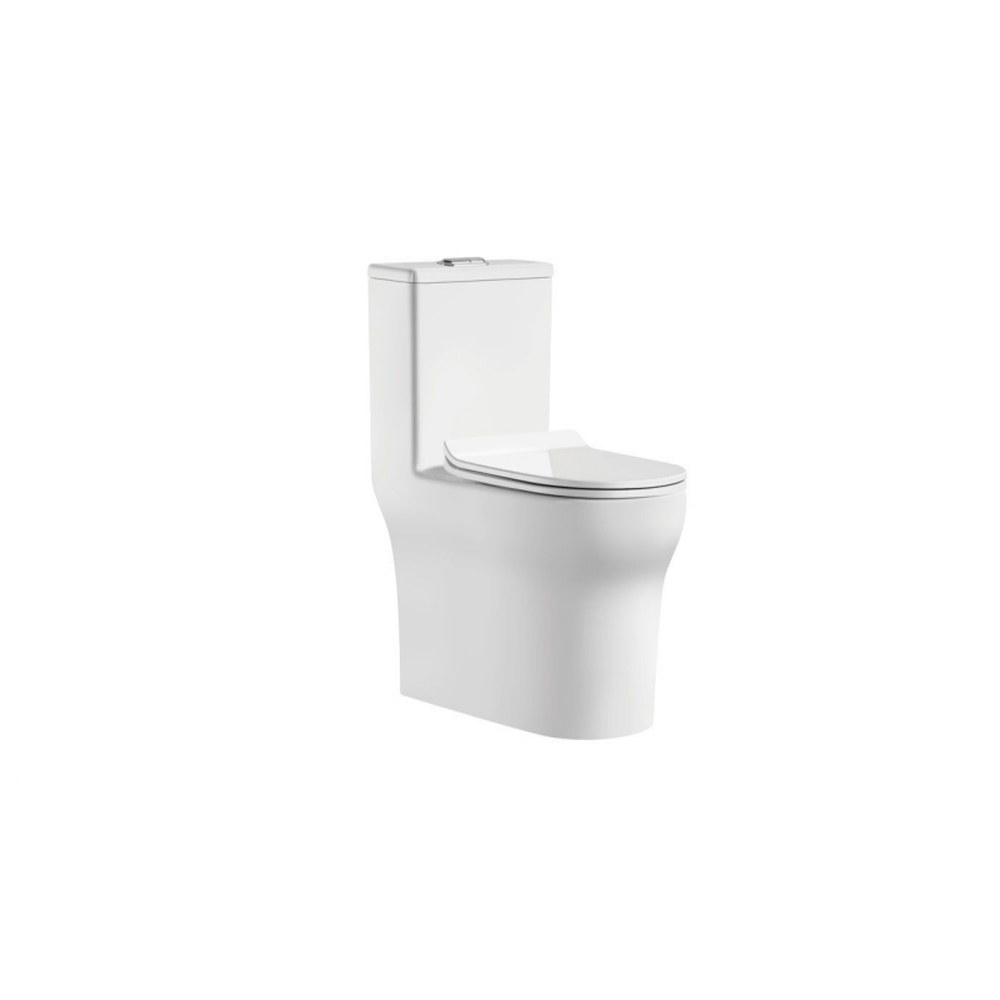
The CT-015 is the one-piece counterpart to the CT-005's close-coupled hourglass silhouette — a unit where the pan body cinches inward at a defined mid-waist before expanding again into a broad, rounded base. Here the effect is refined rather than dramatic: the concavity is measured, the flare controlled, and the overall silhouette reads as elegant and considered rather than theatrical. The tall square cistern sits above with characteristic discipline, its flat top carrying a centred top-flush button that preserves the uninterrupted surface language across all four faces. Together they form the most formally coherent square-over-waisted-oval composition in the CT series.
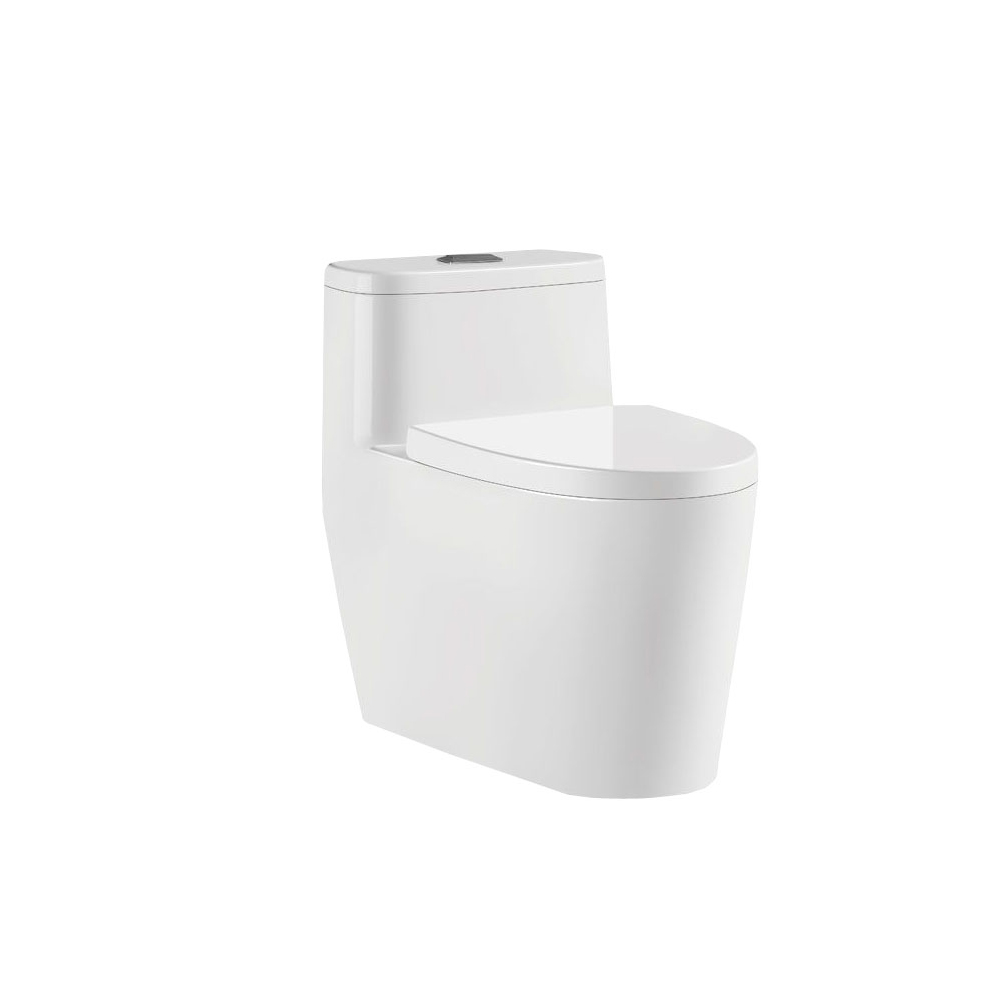
The CT-023 introduces the most structurally distinctive cistern form in the entire CT series — a stepped, low-profile cistern that descends in two visible horizontal planes from back to front, creating a cascading profile that is immediately recognisable among its peers. The stepped lid creates a wide, shallow horizontal shelf effect at the top of the unit, giving the toilet a uniquely low visual centre of gravity despite its broad pan volume. The pan itself is among the most generously rounded in the series — a wide, full oval that sweeps continuously from seat to floor with the kind of confident, space-filling volume that anchors the bathroom floor and completes the unit's distinctive silhouette. The recessed dark flush button sits integrated into the flat upper step of the cistern lid, flush with the surface rather than projecting above it.
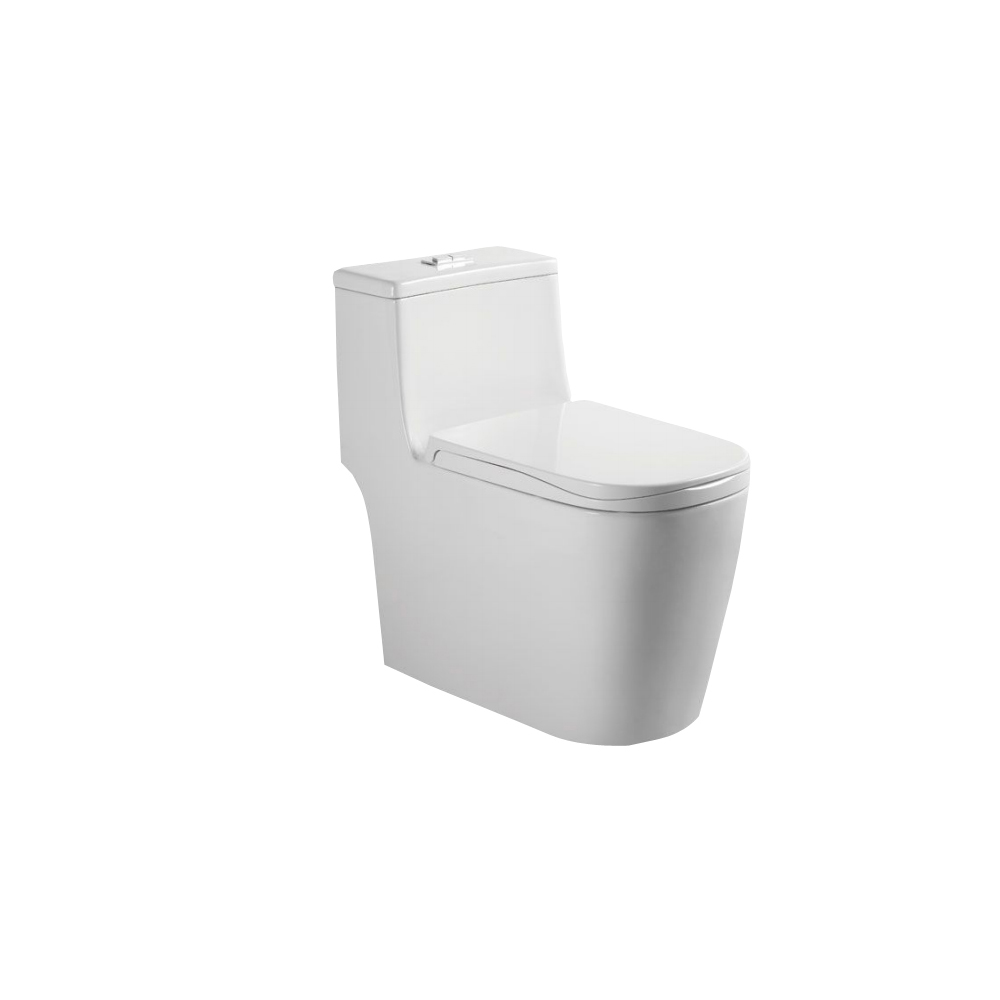
The CT-017 is the most harmoniously proportioned unit in the CT one-piece range — a toilet where the cistern and pan feel genuinely designed as a pair rather than contrasted against each other. The cistern is neither compact nor tall, settling at a medium height that flows naturally into a pan body of comparable width, creating a unified mass that reads as a single resolved object rather than two geometric statements in dialogue. The pan form is the key: it carries the square language of the cistern downward, maintaining softly squared corners throughout the body before opening into a broad, rounded base — the square and the oval reconciled into a single coherent form. The top-flush button and clean flat lid complete the picture without interruption.