
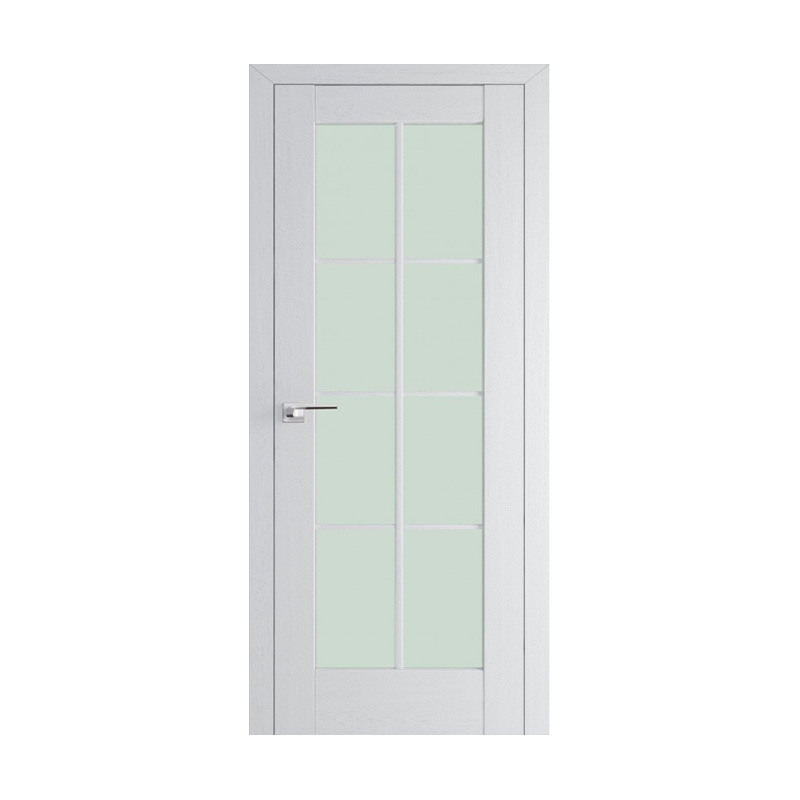
The D8700 sits precisely between the D8704's nine-pane black grid and the D8705's single undivided glass field — and in doing so, stakes out its own clearly defined position. Like the D8704 it uses a glazing bar grid to structure the glass area; like the D8705 it is white, minimal, and committed to maximising the glazed proportion of the door face. The distinction is in the grid geometry: where the D8704's 3×3 nine-pane square grid reads as a graphic composition — almost a piece of wall art — the D8700's 2×4 eight-pane arrangement (two columns, four rows of taller rectangular panes) reads as a window: specifically, as the tall, narrow, vertically emphasised sash window of Georgian and Federal architecture, or the full-height French casement of Haussmann Paris. The panes are tall rather than square, the vertical emphasis of the grid reinforcing the door's own height rather than working against it. Critically, the glazed grid here extends the full height of the door leaf — from top rail to bottom rail — with no solid lower panel; the D8700 is fully glazed, making it the most light-permeable model in the SHUIDAO glazed door range. The brushed chrome bar handle — a horizontal tubular bar rather than the square-rose lever of the D8704/D8705 — is a deliberate hardware choice that reinforces the door's connection to French door and casement window conventions.
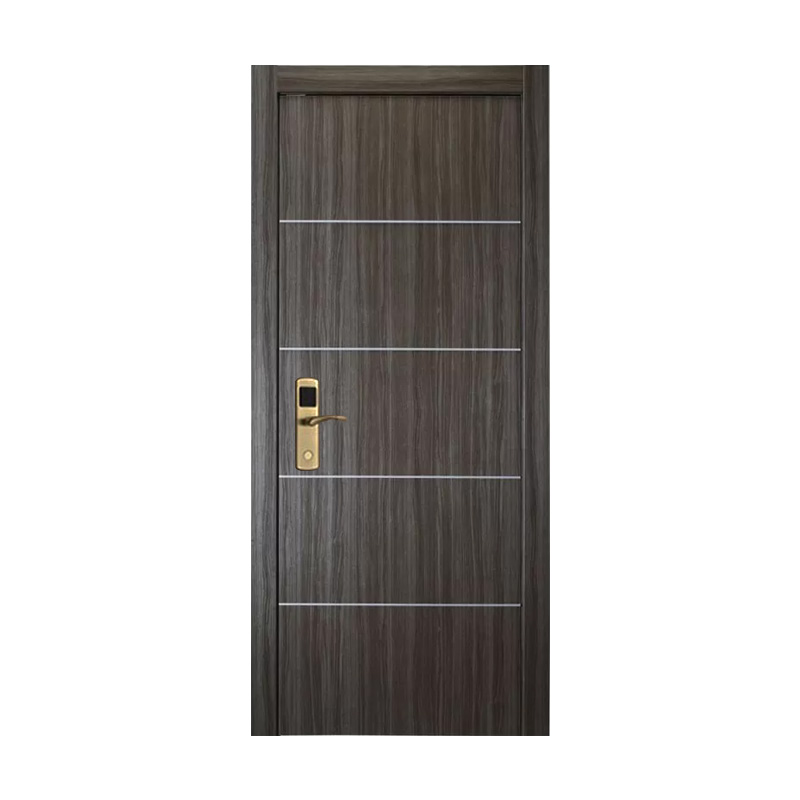
The D8666 introduces a material detail that none of the other smart lock door models in the SHUIDAO range employ: inlaid metal strip inlays running the full horizontal width of the door face. Four parallel silver / brushed aluminium strips are let into the dark grey-brown woodgrain surface at evenly distributed intervals, creating a precise horizontal rhythm across the full door width. Where the D8658 achieved a similar horizontal banding effect through routed grooves alone, the D8666 replaces shadow with material — the metal strips catch and reflect light independently of the woodgrain ground, introducing a genuine material contrast rather than a tonal one. The overall effect is closer to high-end furniture making or contemporary architectural joinery than to standard door manufacture: the inlaid metal reads as a deliberate craft decision, the kind of detail that distinguishes a specified product from a standard supply item. The dark grey-brown woodgrain — cooler and more silvered than the walnut tones of the D8658 and D8660, with a fine straight grain that runs vertically — provides the correct dark ground for the metal strips to register clearly without competing.
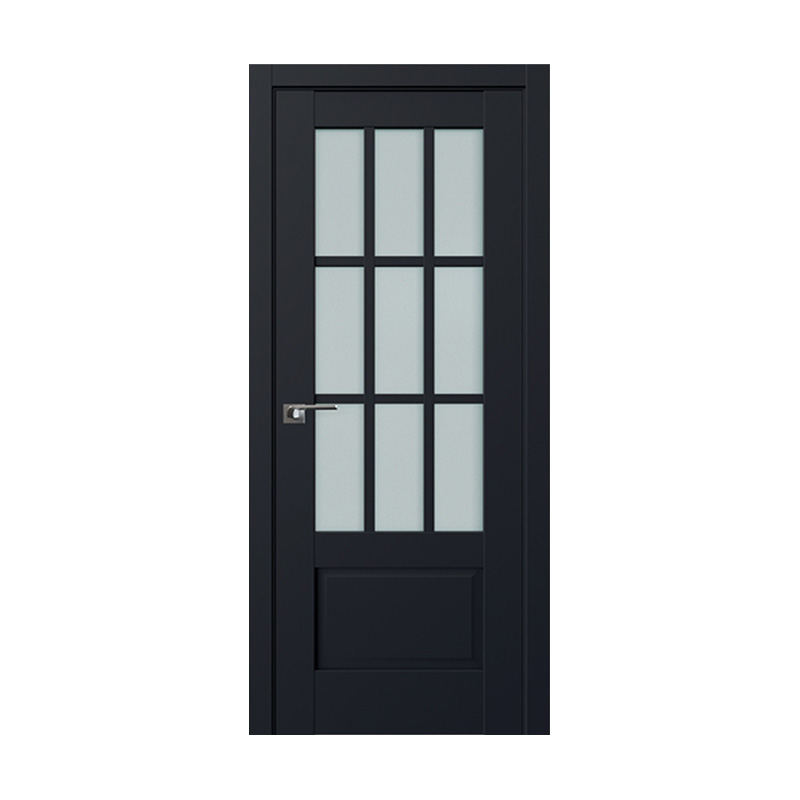
The D8704 introduces glass into the SHUIDAO interior door range for the first time — and it does so through one of the most enduring and versatile glazed door formats in modern interior design: the grid-lite. Nine panes of frosted glass, arranged in a 3×3 grid and separated by slim black glazing bars, occupy the upper two-thirds of the door face; a single solid raised panel at the lower third closes the door below handle height. The format has roots in Georgian sash windows and Victorian conservatory joinery, was revived and transformed by the Arts and Crafts movement, became a defining element of French café and brasserie interiors, and has arrived in the 21st century as a staple of contemporary industrial-lux, Japandi, and dark-luxury residential and hospitality design. In matte black — door face, frame, and glazing bars all in the same deep non-reflective finish — the nine-pane grid reads as a graphic composition rather than a window reference: nine frosted glass rectangles set in a black grid, the soft diffused light passing through the glass panels creating a luminous, backlit quality that changes character entirely depending on the light conditions on either side of the door. The gunmetal square-rose lever handle is minimal, architectural, and correctly scaled.
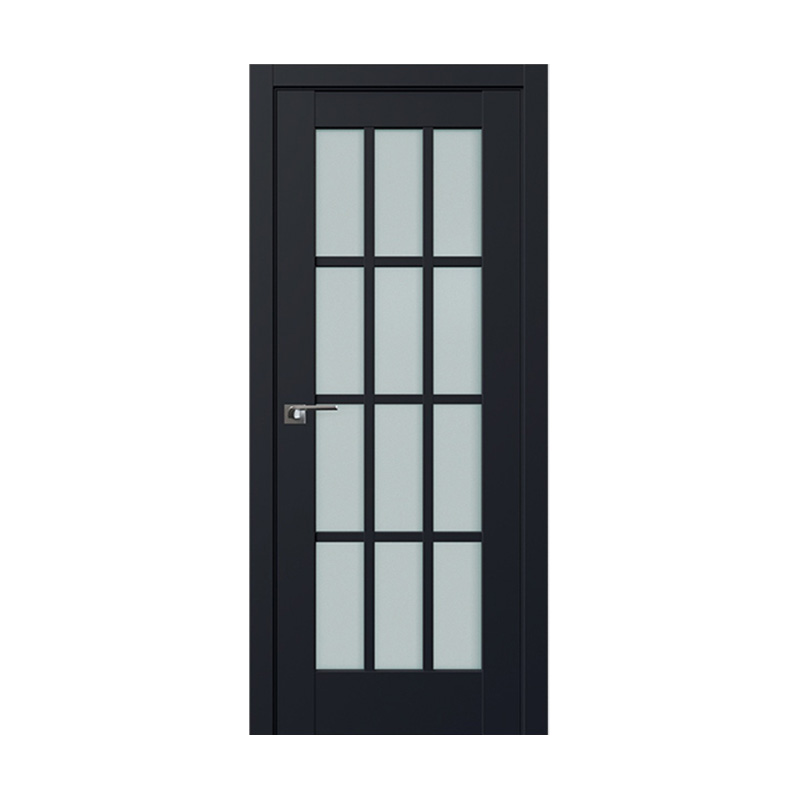
The D8702 is the D8700's dark counterpart and the D8704's fully glazed sibling — and it resolves a specific question that the existing glazed door range poses: what happens when you take the D8700's fully glazed 2-column format, keep the matte black finish of the D8704, and add one additional row of panes? The answer is the D8702: twelve panes in a 3-column × 4-row grid, full door height, no solid lower panel, all in matte black with the same gunmetal square-rose lever handle that the D8704 established as the hardware language of the black glazed door sub-range. The move from two columns to three, and from eight or nine panes to twelve, changes the grid's character meaningfully. The D8700's two-column grid reads as a tall French casement window. The D8704's 3×3 grid reads as a compact graphic composition. The D8702's 3×4 twelve-pane grid — three columns of four tall rectangular panes — reads as something more architectural: an orangery window, a Victorian conservatory facade, a full-height industrial clerestory. The grid is dense enough to be structural-looking, open enough to pass abundant diffused light, and in matte black substantial enough to anchor an entire room's design language.
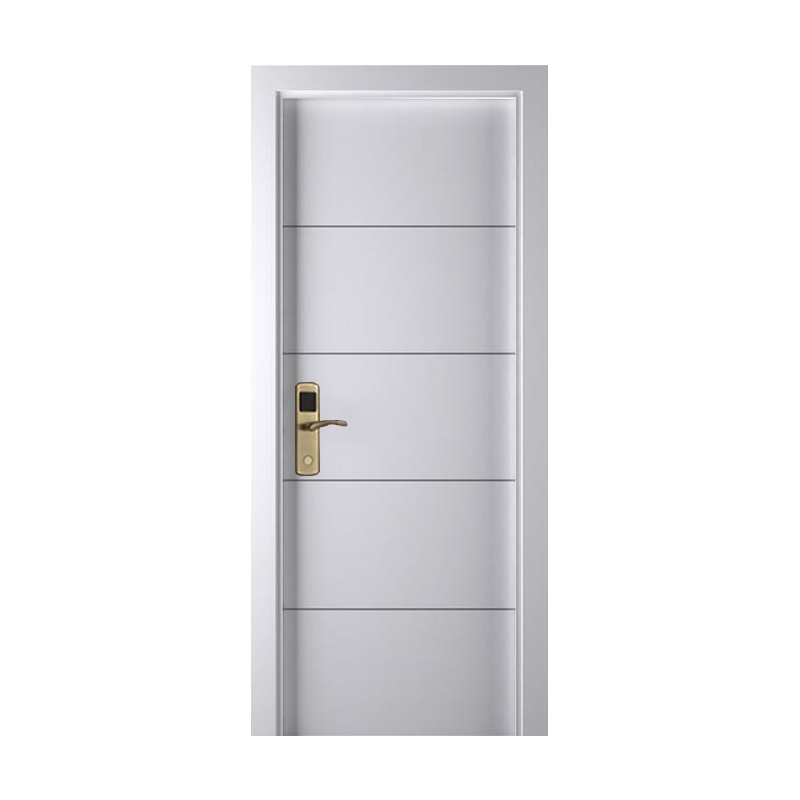
The D8664 is the white equivalent of the D8658's warm-walnut grooved-panel format — the same five-band horizontal groove composition, the same evenly distributed parallel lines dividing the door face into five equal fields, but here executed entirely in white. And white changes everything. Where the D8658's grooves read as warm and residential against the walnut ground, the D8664's grooves read as architectural and precise against the white — the shadow lines sharper, the bands more graphic, the overall effect closer to a wall panel system or a contemporary joinery cabinet face than to a timber door. The door is also notably wider in proportion than most of the other D86 models — a broader leaf that gives the five-band composition more horizontal breathing room and makes the groove rhythm feel more measured and considered. The antique brass electronic lever lock is the one element that prevents the white door from reading as clinical: its warm, aged gold tone is the exact counterpoint the all-white composition needs, the single chromatic note that confirms this is a luxury product rather than a builder's standard.
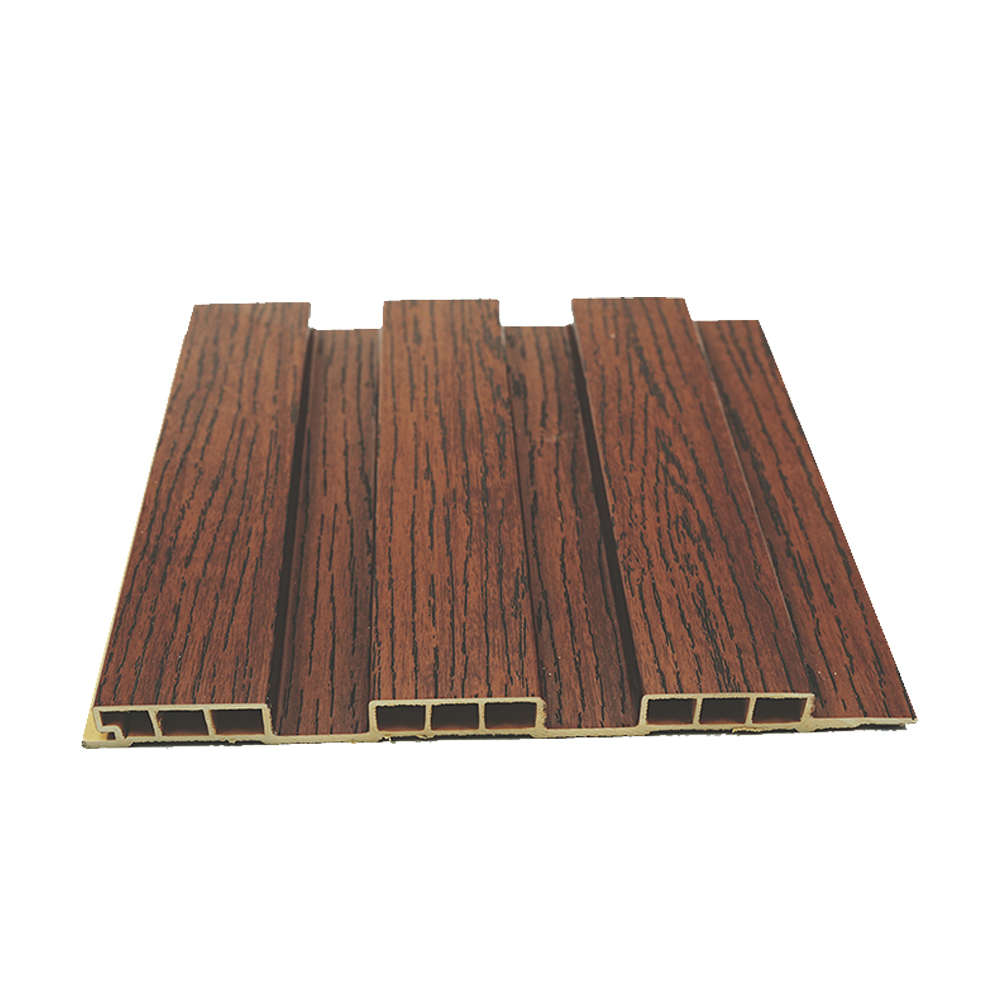
The SD-AGWP029 introduces a profile detail that no other panel in the SD-AGWP series carries: a fine centre groove cut into the crown of each wide flat-top batten. The effect is precise and intentional — each batten's flat top is divided by a narrow notch into two slightly raised shoulders, adding a secondary shadow line at the rib crown that runs parallel to the primary channel shadows between battens. Where a plain flat-top batten reads as a single surface element, the SD-AGWP029's crown-grooved batten reads as a composed detail — a panel that has been given one more degree of considered articulation than the standard square batten format. The deep rosewood finish amplifies this quality: the bold, open-grained red-brown woodgrain with its dark figuring lines is the most visually rich and chromatic surface in the SD-AGWP range, a finish that reads as genuinely warm and materially luxurious rather than neutral or restrained.
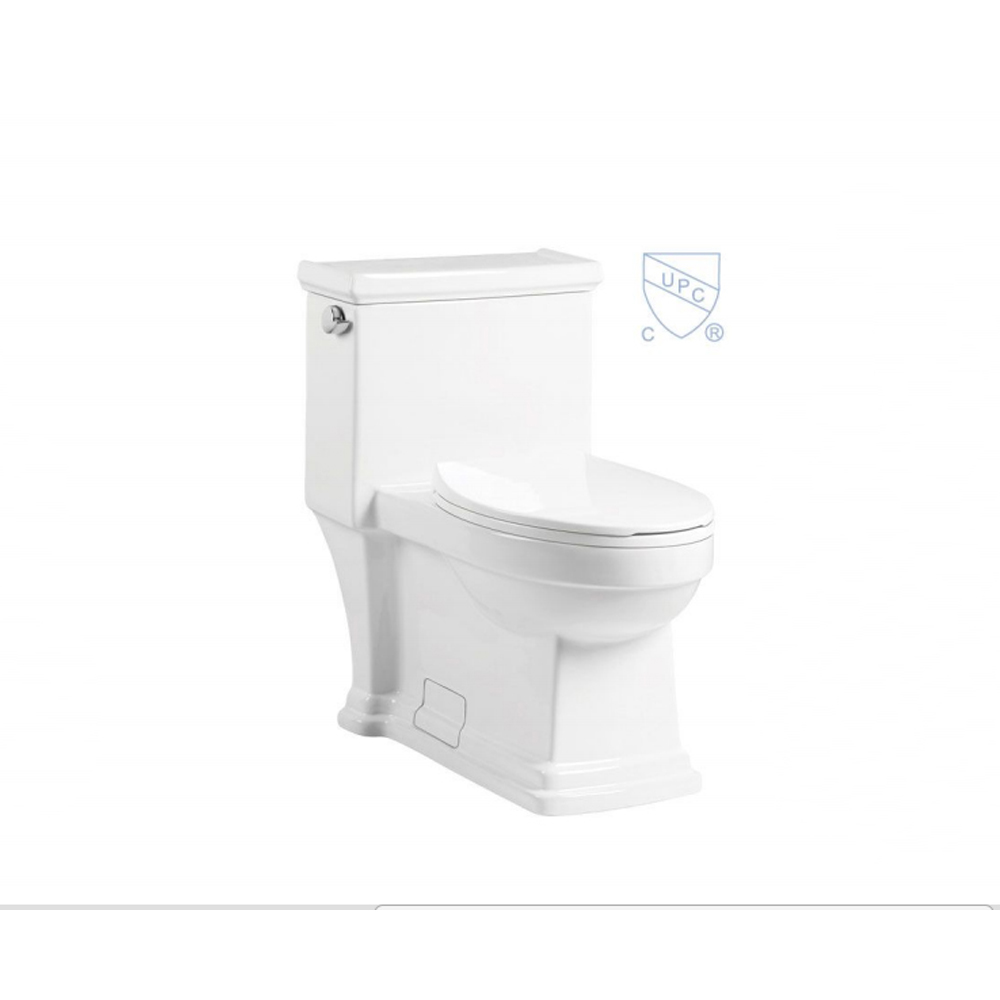
Where the CT-006 speaks in the language of smooth contemporary curves, the CT-007 reaches further back — to the American traditional bathroom canon, where moulded cornices, stepped base plinths, and architectural panel detailing were the hallmarks of quality. Every surface here carries intentional relief: the cistern lid is framed by a raised cornice edge, the cistern body steps outward at the base onto a moulded shelf, the pan skirt features a recessed rectangular cartouche panel at the front, and the entire base plinth is defined by a bold stepped profile that anchors the unit to the floor with genuine visual gravitas. cUPC certified for the North American market.
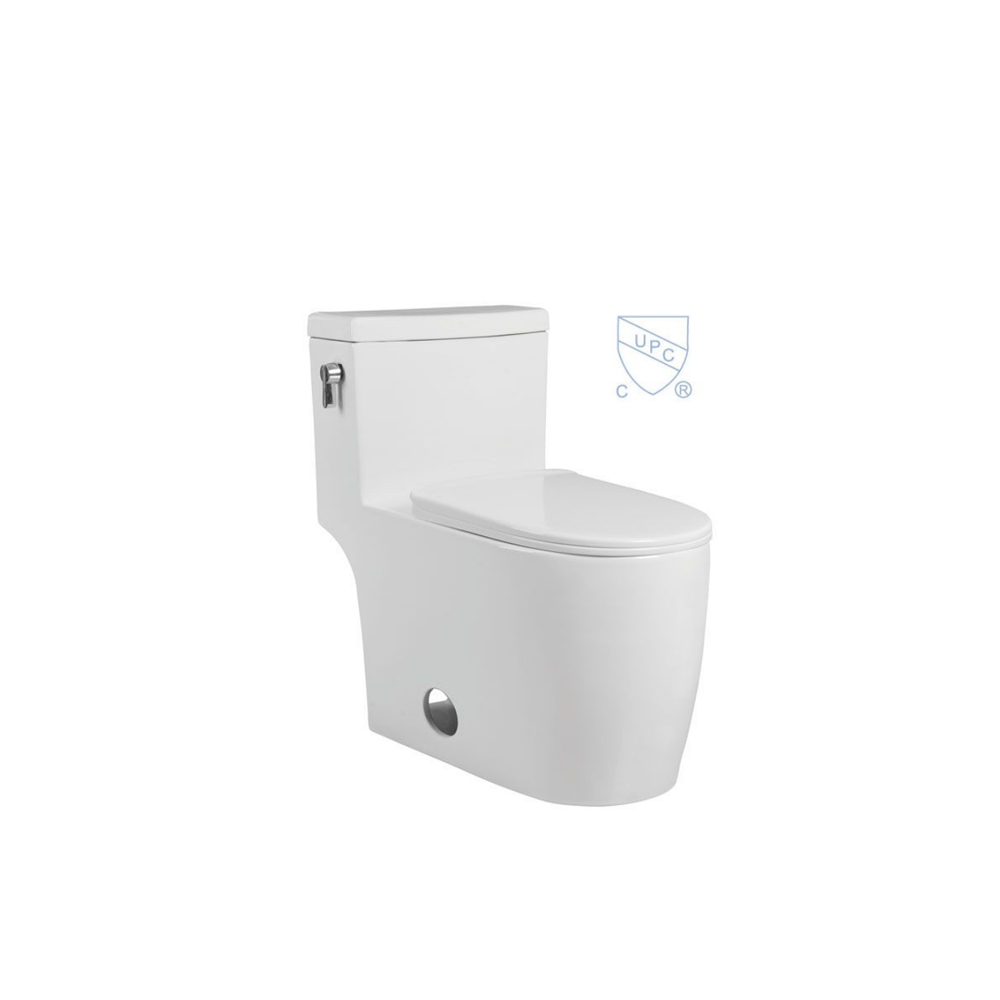
The CT-009 refines the one-piece skirted formula with a notably fuller, more rounded pan body that swells generously at the sides — giving it a softer, more approachable presence than the CT-008's restrained geometry. The cistern sits compact and flat-topped above, its clean rectangular form creating the same familiar square-over-oval contrast that defines the back-to-wall CT-001 and CT-003, here resolved into a seamless one-piece casting. A chrome-ringed floor bolt access cap at the front base adds a polished finishing detail that elevates the ground-line presentation. cUPC certified for the North American market.
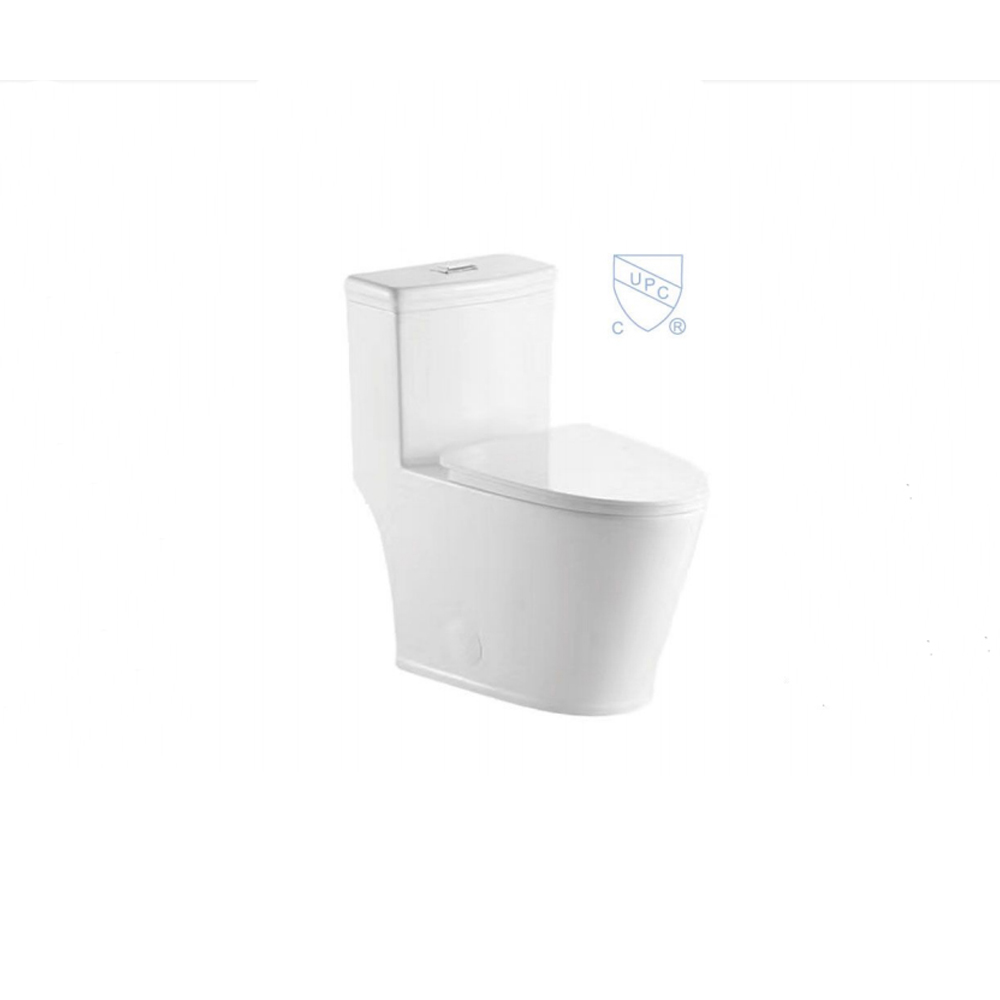
The CT-013 resolves the square-over-oval dialogue of the CT series into its most harmonious and commercially accessible expression. The cistern is compact and self-contained — a neat square block that sits atop the pan without imposing — while the pan body below inflates into the fullest, most balloon-like oval in the entire range. There is no waist, no cinch, no drama: just a generous, confidence-inspiring roundness that fills the visual field from seat to floor with a single unbroken curve. A small circular floor bolt access point is visible at the lower front, and the top-flush button sits flush and centred on the cistern lid. cUPC certified for the North American market.
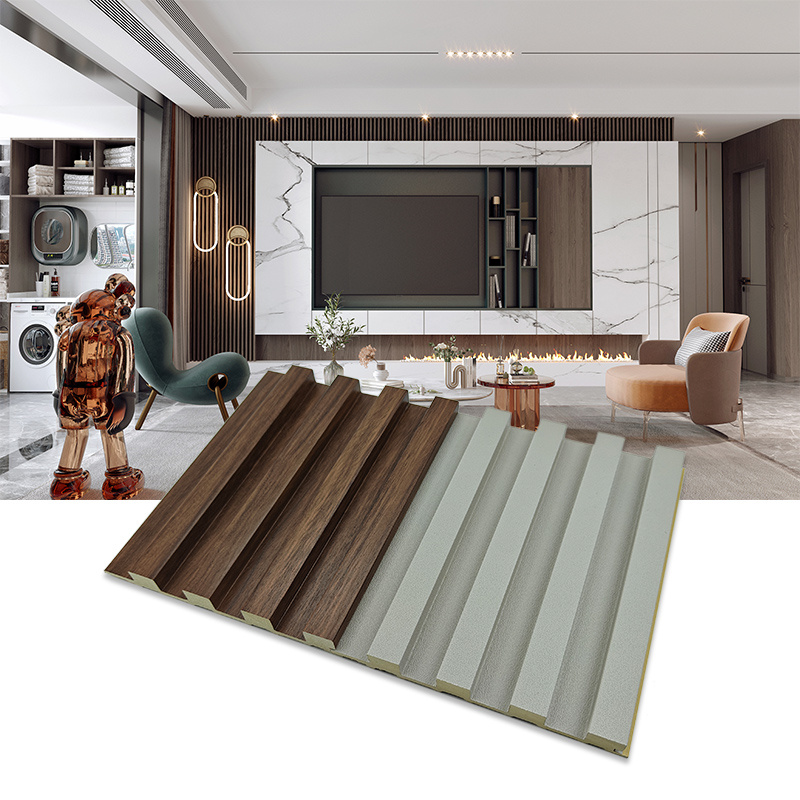
The SD-AGWP032 introduces a panel format that no other product in the SD-AGWP series offers: a single panel that carries two colours simultaneously. Left half dark walnut, right half sage greige — the colour transition running down the panel's length as a clean, precise material boundary that divides the panel face into two equal tonal zones. Installed in continuous vertical runs, this dual-tone construction enables a wall surface that graduates from dark to light, from warm to cool, without requiring any junction detail, trim strip, or design intervention — the colour transition is built into the panel itself. The narrow-pitch multi-flute profile adds directional texture and shadow depth across both colour zones, the rib geometry reading consistently whether in the dark walnut or sage greige half. The installation scene shows the dark walnut colourway deployed as a full-height accent zone to the left of a Calacatta marble TV wall — a material combination that is one of the defining visual signatures of current premium Chinese residential design.
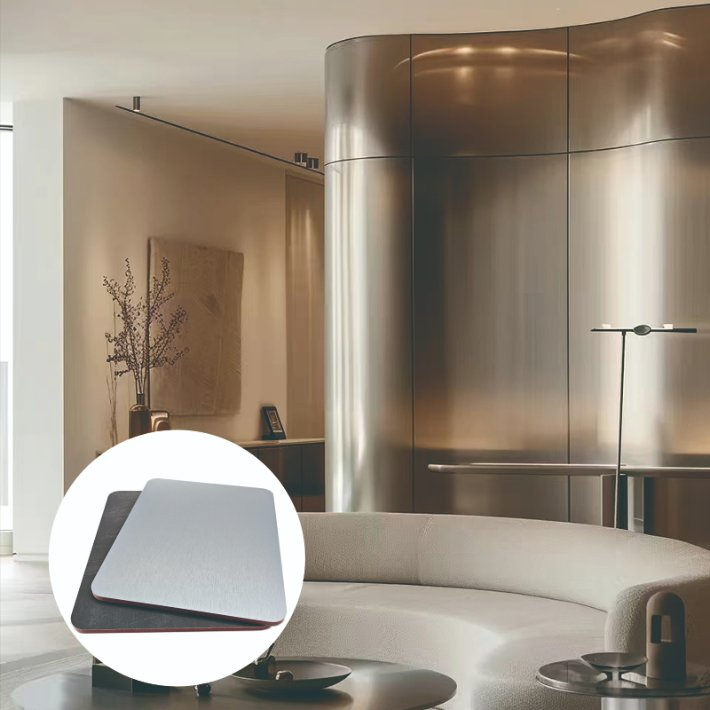
A curved wall is one of the most demanding and most impressive design moves in contemporary interior architecture — and the material that covers it defines whether the curve reads as a confident architectural gesture or an awkward structural compromise. The SD-AGWP031 in brushed metallic finish is shown here wrapping a full-height curved partition column in a premium residential living room, the warm champagne-silver surface catching and redistributing light continuously around the curve's changing angle, the panel joints reading as fine controlled lines that articulate the surface without interrupting the curve's flow. The result is the kind of wall finish that is normally associated with bespoke metal cladding or high-specification aluminium composite panel systems — here delivered as an installation-ready WPC or composite panel product that is workable, lightweight, and joinable without specialist metal fabrication trades.
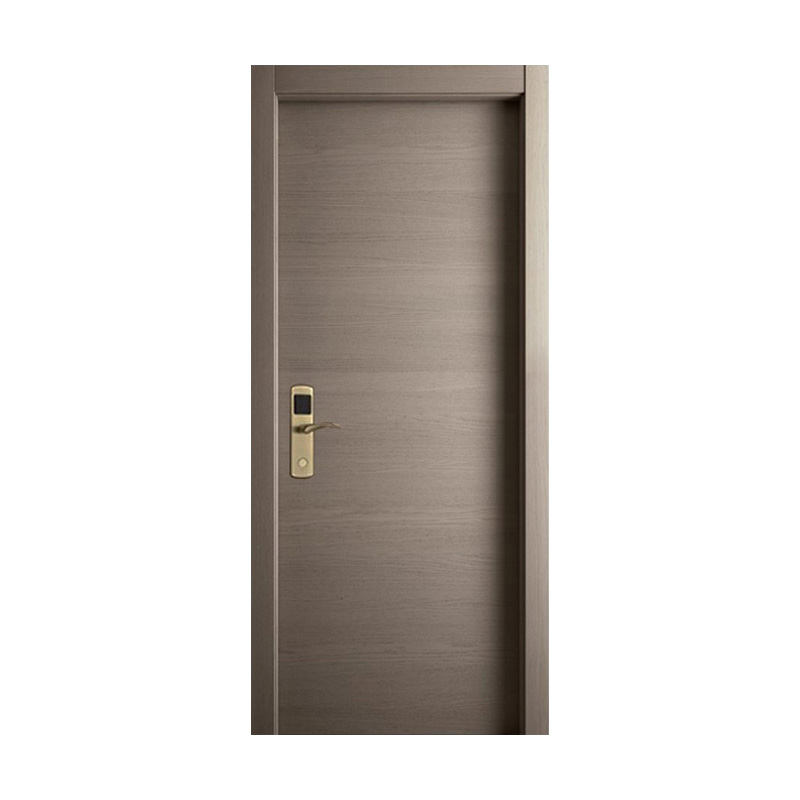
Within the SHUIDAO smart lock flush door range, each model has staked out its own colour territory — the D8657's near-black wenge, the D8658's warm mid-walnut, the D8659's amber cherry, the D8660's greige grid composition. The D8655 occupies the coolest, most contemporary position of the group: a fine horizontal woodgrain in a desaturated grey-taupe — the specific tone that sits at the intersection of greyed oak, warm grey, and the muted linen colours that have defined high-end Scandinavian and Japanese hospitality interiors for the past decade. The grain here runs horizontally rather than vertically, a distinction that subtly widens the perceived door face and gives the surface a more architectural, less timber-yard quality. The satin brass electronic lever lock — warmer and more matte than the bright champagne gold of the D8657/D8658, yet lighter and less aged than the antique bronze of the D8659 — is precisely calibrated to the grey-taupe ground: enough warmth to prevent the door from reading as cold, not so much as to introduce the residential sweetness that a darker bronze would carry.
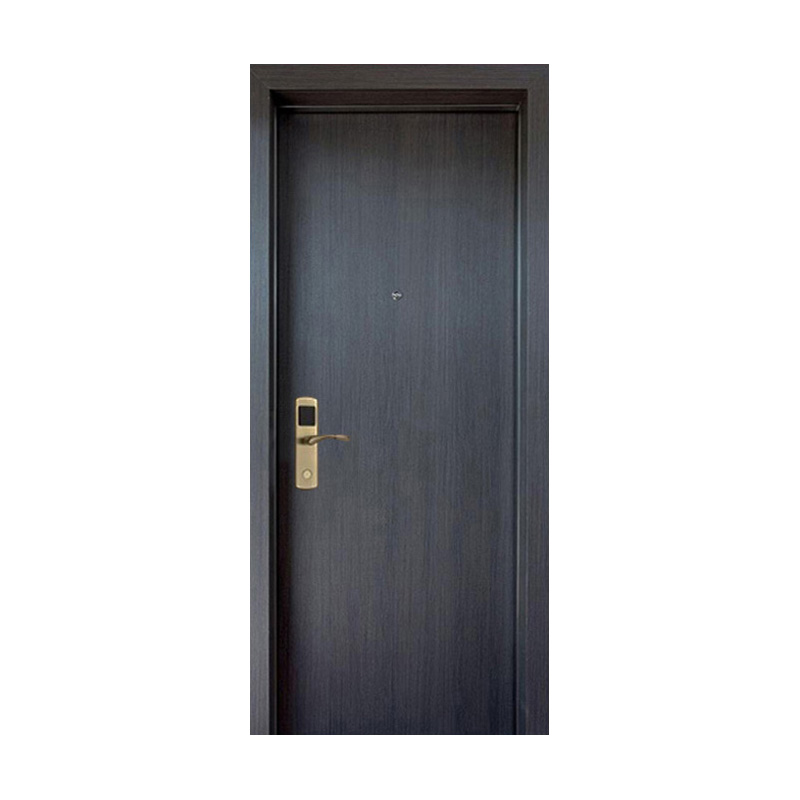
The D8657 is the series' first complete departure from decorative panel moulding — and it is a purposeful one. Where the D8645 through D8650 speak in the vocabulary of classical relief, the D8657 speaks in the language of contemporary hospitality and residential security: a completely flat, flush-faced door leaf, surfaced in a dark wenge-tone woodgrain veneer or foil, paired with a gold-tone electronic smart lock system that is the door's sole surface feature. The effect is clean, functional, and immediately recognisable as the standard visual language of mid-to-high-end hotel guest room and serviced apartment entry doors globally — a format where the door's job is not to decorate but to perform, and where the lock system itself carries all the design content. The fine vertical woodgrain texture runs full-height across the flush face, providing enough surface movement to prevent the door from reading as featureless while maintaining the strict planarity that flush-panel construction requires.
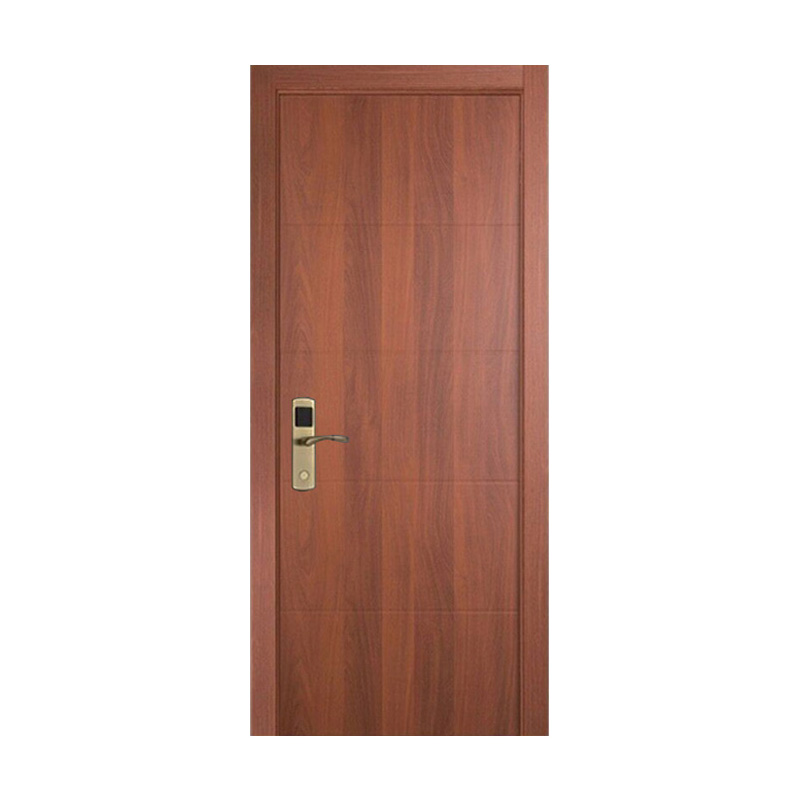
The D8659 completes the smart lock flush-door trio alongside the D8657 and D8658 — and it does so by shifting both the colour temperature and the surface approach once more. Where the D8657 is dark and austere, and the D8658 adds horizontal groove articulation in a warm mid-walnut, the D8659 returns to a fully flush, zero-groove face but wraps it in the warmest, most residential tone of the three: a rich cherry-walnut woodgrain that reads as genuinely warm, even amber-toned under certain light conditions. The surface is completely flat and uninterrupted — no grooves, no inlays, no relief — but a single very fine hairline horizontal seam is visible at approximately mid-door height, suggesting a two-piece construction join or a deliberate design line that divides the flush face into upper and lower halves with the lightest possible touch. The antique bronze lock escutcheon — darker and more aged in tone than the bright gold of the D8657 and D8658 — is the right hardware choice for this warmer, more residential colour register.
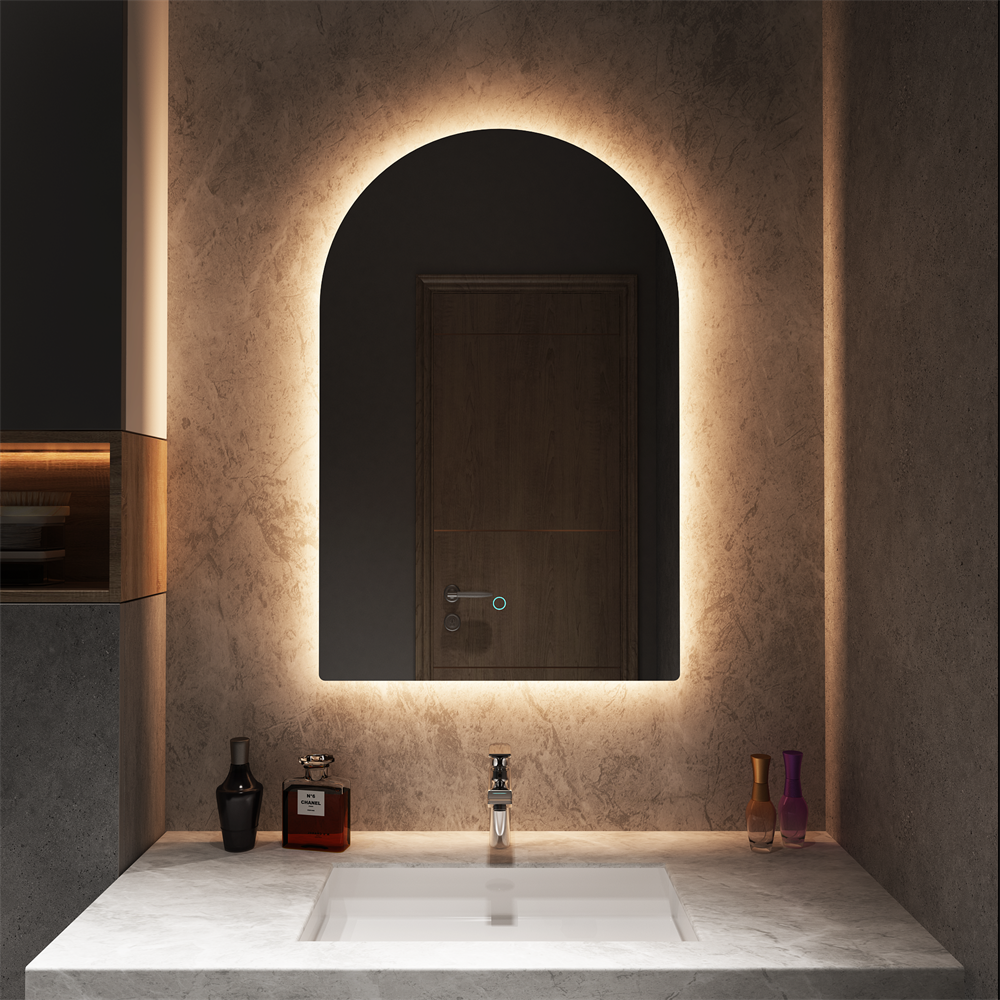
The arch — architecture's oldest gesture of welcome — rendered in mirror and warm light. The SHUIDAO frameless arch LED mirror distills one of design's most enduring forms to its purest expression: a flat-bottomed rectangle crowned with a perfect semicircular arch, completely frameless, its full-perimeter warm amber halo flooding the surrounding raw plaster wall with a glow that transforms the entire vanity alcove into a lantern. Classical proportion. Contemporary execution. Timeless result.
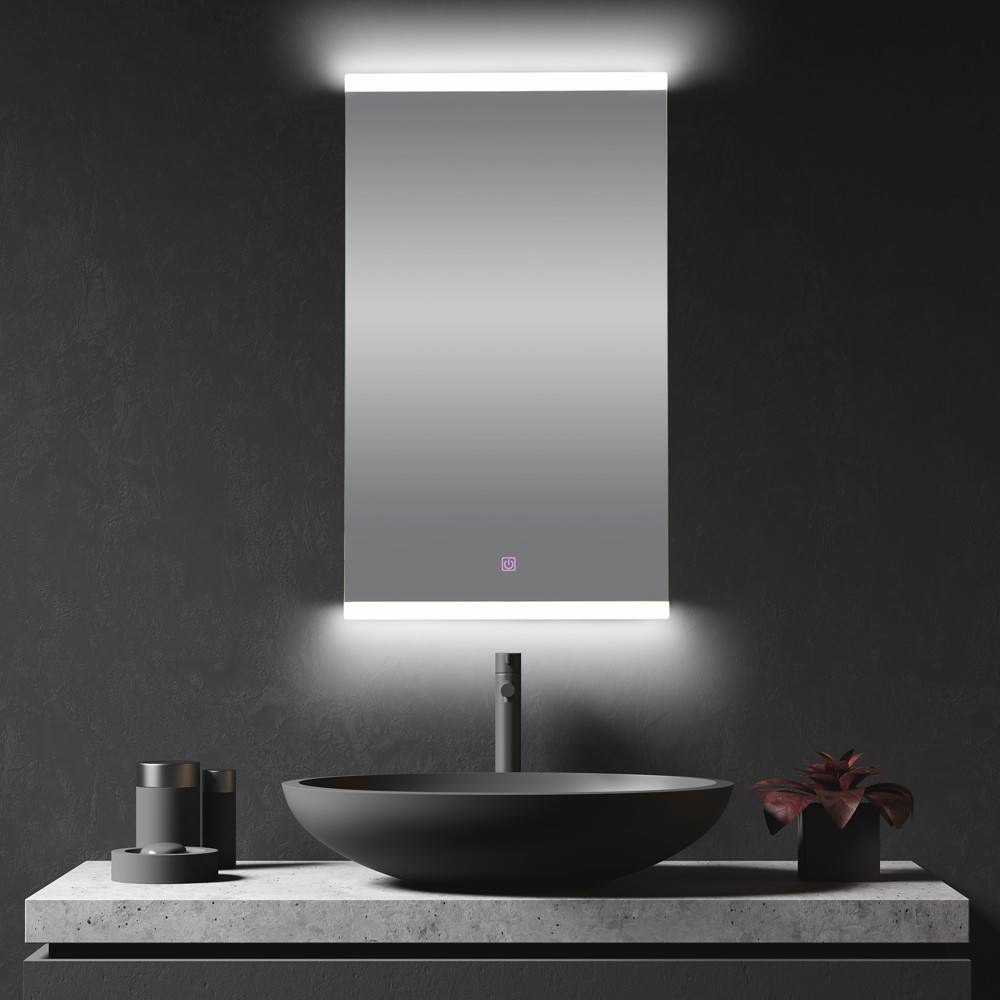
Light as architecture — the SHUIDAO M005 abandons the conventional perimeter halo in favour of two precisely positioned horizontal LED bars: one at the top edge, one at the bottom, each projecting a broad wash of cool white light upward toward the ceiling and downward onto the countertop respectively. The mirror glass itself is frameless and unlit at the sides, allowing the two light bands to read as deliberate linear elements — a graphic, architectural lighting statement that looks as considered as a specification-grade wall sconce.