
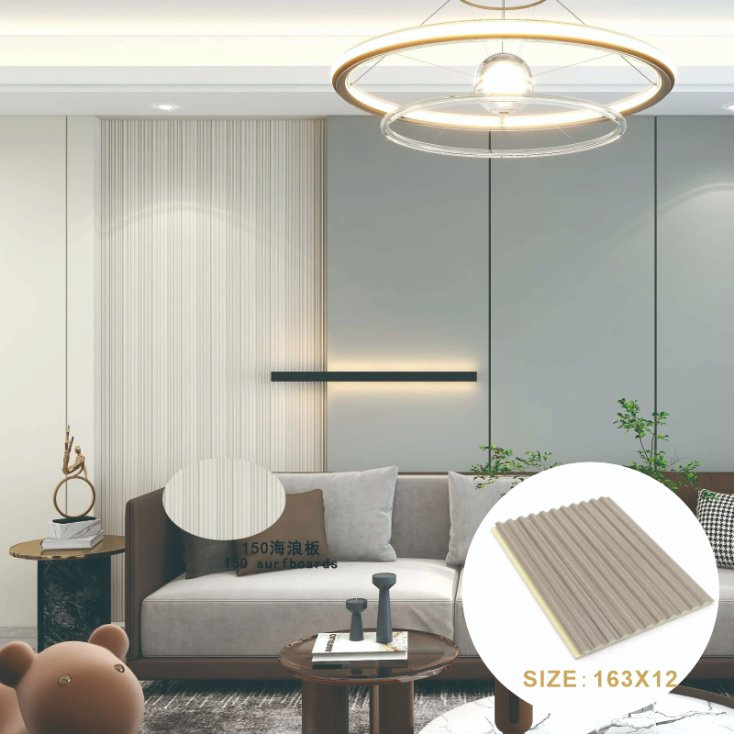
The SD-AGWP024 takes its name — 海浪板, surfboard panel — from the profile that defines it: a series of smooth, continuous wave-form ribs that undulate across the panel face like a cross-section of a calm sea. Where square-profile batten panels create hard-edged architectural geometry, the SD-AGWP024's wave ribs are entirely curved — convex crowns rolling smoothly into concave valleys, the surface never breaking into a flat plane or a sharp angle. Installed vertically across a wall surface in continuous runs, the wave profile generates a living, shifting light effect that changes character entirely across the day: soft and tonal under ambient light, dramatically shadowed under directional downlighting, luminous and diffused behind a concealed LED strip. The 150mm panel width creates a medium-pitch wave rhythm — wide enough to read as individual surface elements from across a room, tight enough to produce a richly textured wall surface rather than an isolated architectural feature.
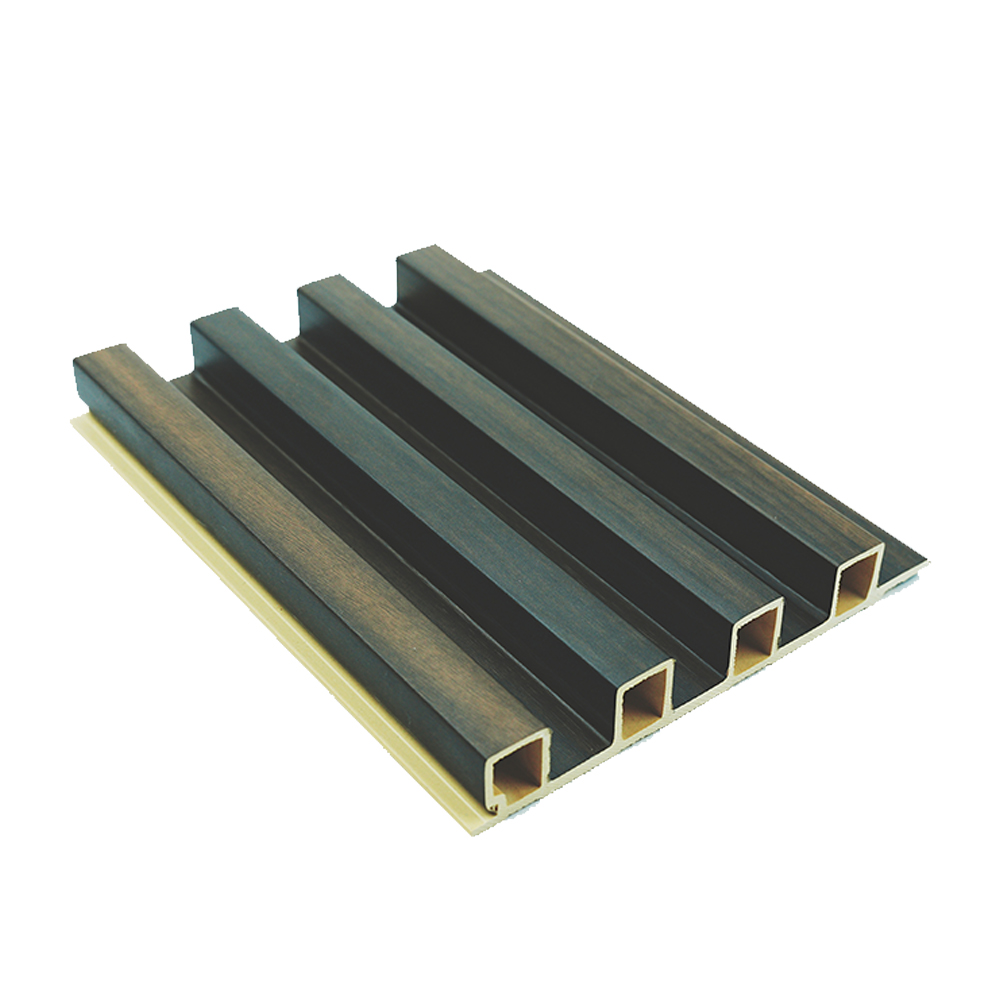
This image shows what the SD-AGWP028 is at its most fundamental level — a precision-extruded WPC panel of four square hollow tubes, standing upright from a flat base plate, with deep open channels between each batten that reach all the way to the base. The cross-section view removes all ambiguity: each batten is a true square hollow profile with flat top, perfectly vertical sides, and sharp 90° corners throughout — the geometry is as clean and resolved as an architectural detail drawing. The dark wenge woodgrain finish covers every surface of every batten continuously — top face, all four side faces, and the channel floor between ribs — so the installed wall reads as a unified dark-timber surface regardless of viewing angle or lighting direction.
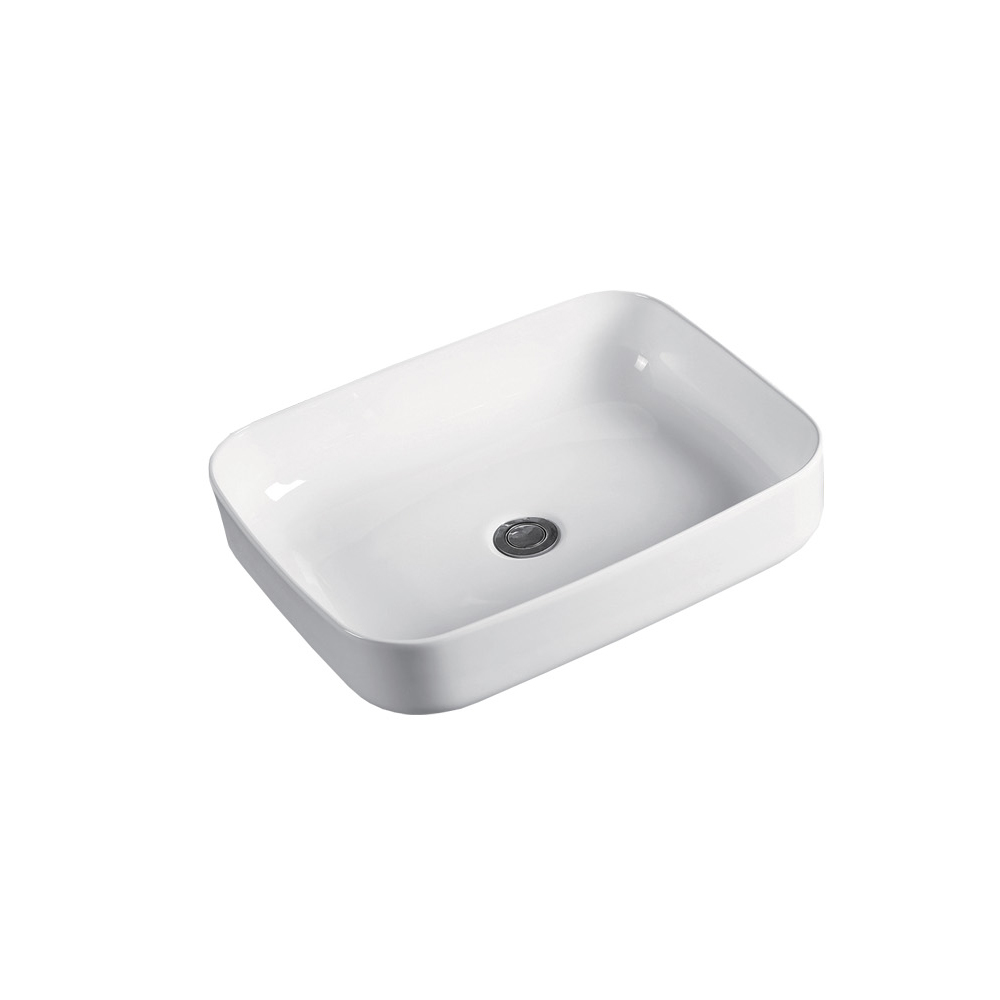
Clean, low-profile, and unhurried — the SHUIDAO AR-009 is the basin that disappears into a well-designed vanity and lets the rest of the bathroom do the talking. The form is a rounded rectangle held shallow and wide, its exterior walls rising from the countertop with a gentle outward curve before meeting the flat rim in a single clean line. The interior bowl follows the same softened geometry, the corner radius generous enough to feel organic without sacrificing the basin's essential rectangular discipline. A chrome centre drain sits flush at the bowl floor, and the absence of any tap hole keeps the rim surface completely uninterrupted — a detail that signals wall-mounted or deck-mounted tap installation and gives the basin a purity of surface that flat-rim square basins rarely achieve.
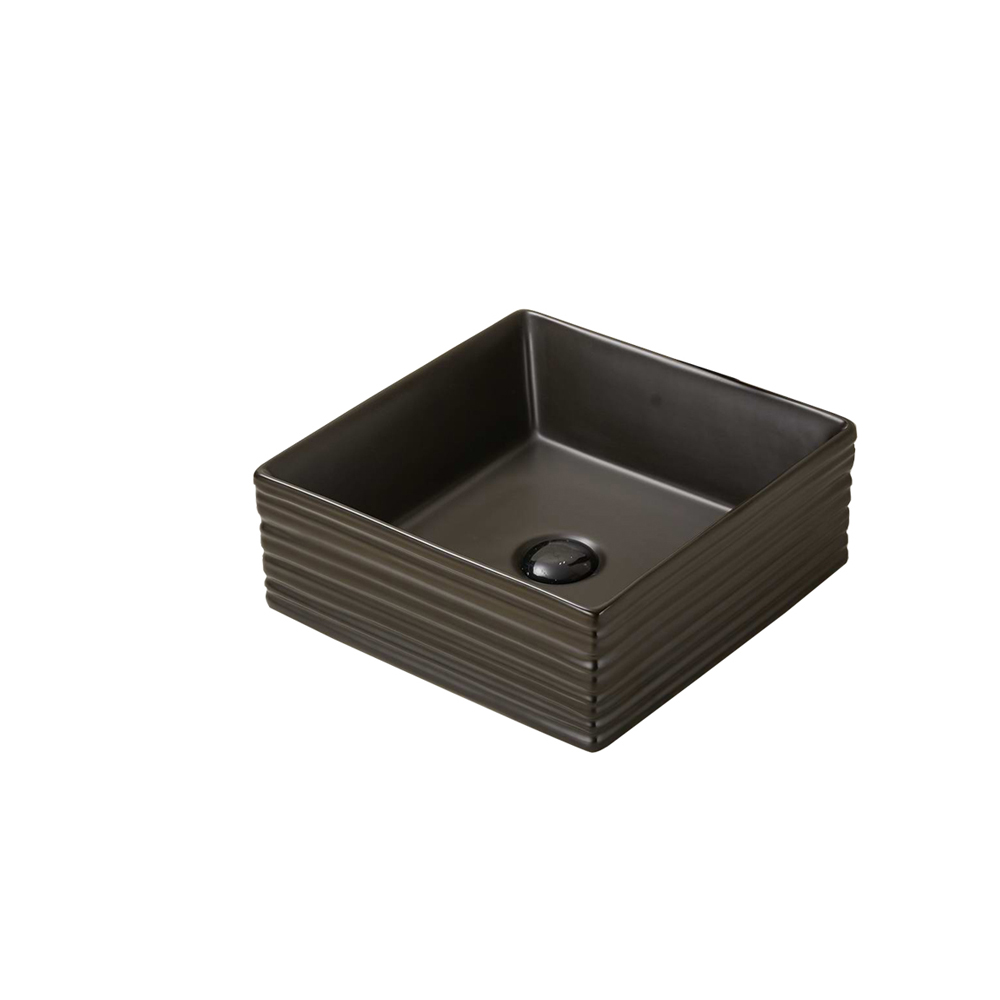
Texture is the argument the AR-017 makes — and it makes it confidently. While most vessel basins present smooth, uninterrupted surfaces, the AR-017 wraps its exterior in a dense sequence of precisely spaced horizontal ribs that run continuously around all four sides, each groove casting a thin shadow line that builds into a quietly complex surface pattern. The effect references Japanese woodworking joinery, mid-century ceramic craft, and contemporary architectural brise-soleil — all at once, and without straining for any of them. The interior bowl is smooth and clean, the matte charcoal finish uniform from exterior rib to interior floor, and the offset matte black drain sits positioned toward one corner as a considered compositional detail rather than an afterthought.
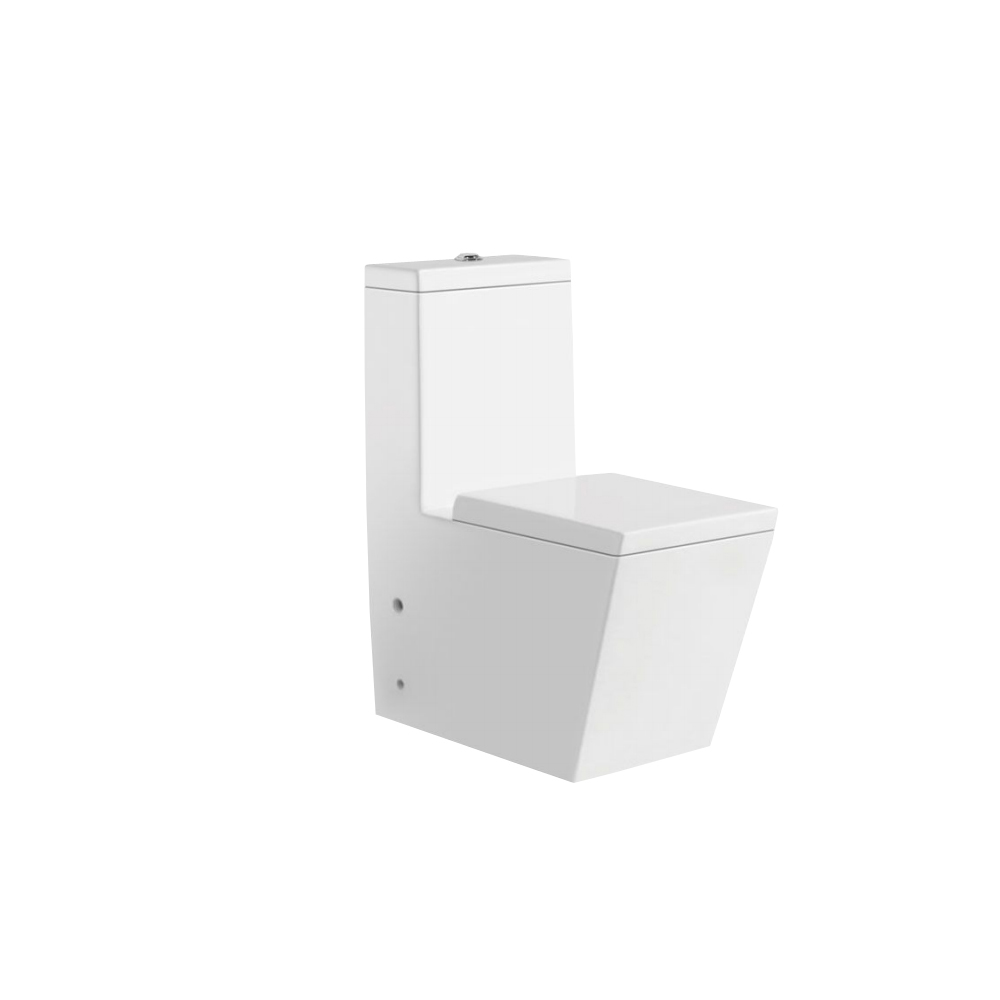
The CT-021 is the close-coupled back-to-wall companion to the CT-010's one-piece rectangular philosophy — a two-piece unit that commits fully to the square from cistern lid to floor tile, maintaining sharp edges, flat faces, and right-angle corners at every junction. Where the CT-010 achieves this in a single seamless casting, the CT-021 delivers the same architectural rigour in a more accessible close-coupled two-piece format, making the rectangular design language available at a different price point and installation context. Two small fixing or inlet points are visible on the pan side — consistent with a back-to-wall configuration engineered for precise wall alignment. The chrome top-flush button sits centred and minimal on the flat cistern lid, the only detail on an otherwise uncompromising white surface.
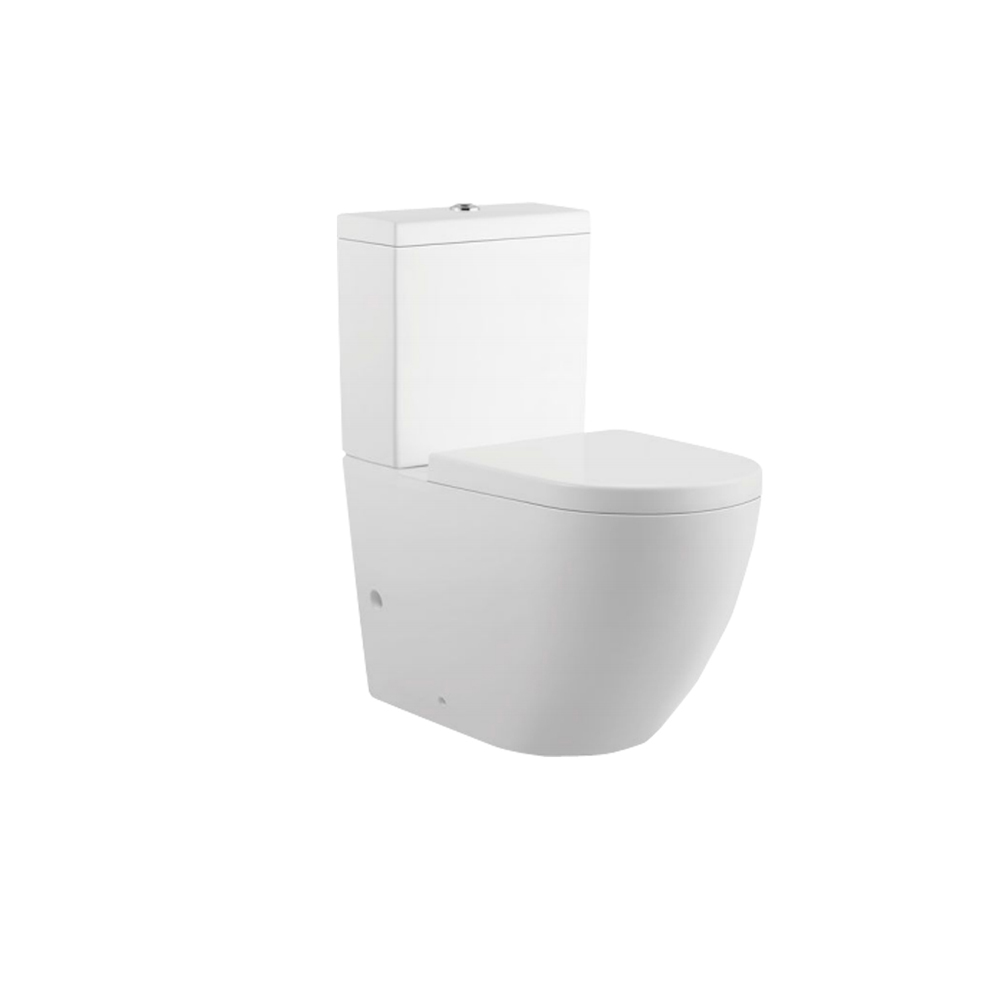
The CT-003 is the most voluminous and enveloping form in the CT series — a fully skirted, generously rounded pan that wraps itself completely around the floor line, offering the visual weight and organic confidence of a sculptural bathroom centrepiece. Set against the sharp rectangular cistern, the contrast is at its most dramatic here: strict geometry above, soft continuous curve below. The result is a toilet that feels both substantial and effortlessly clean.
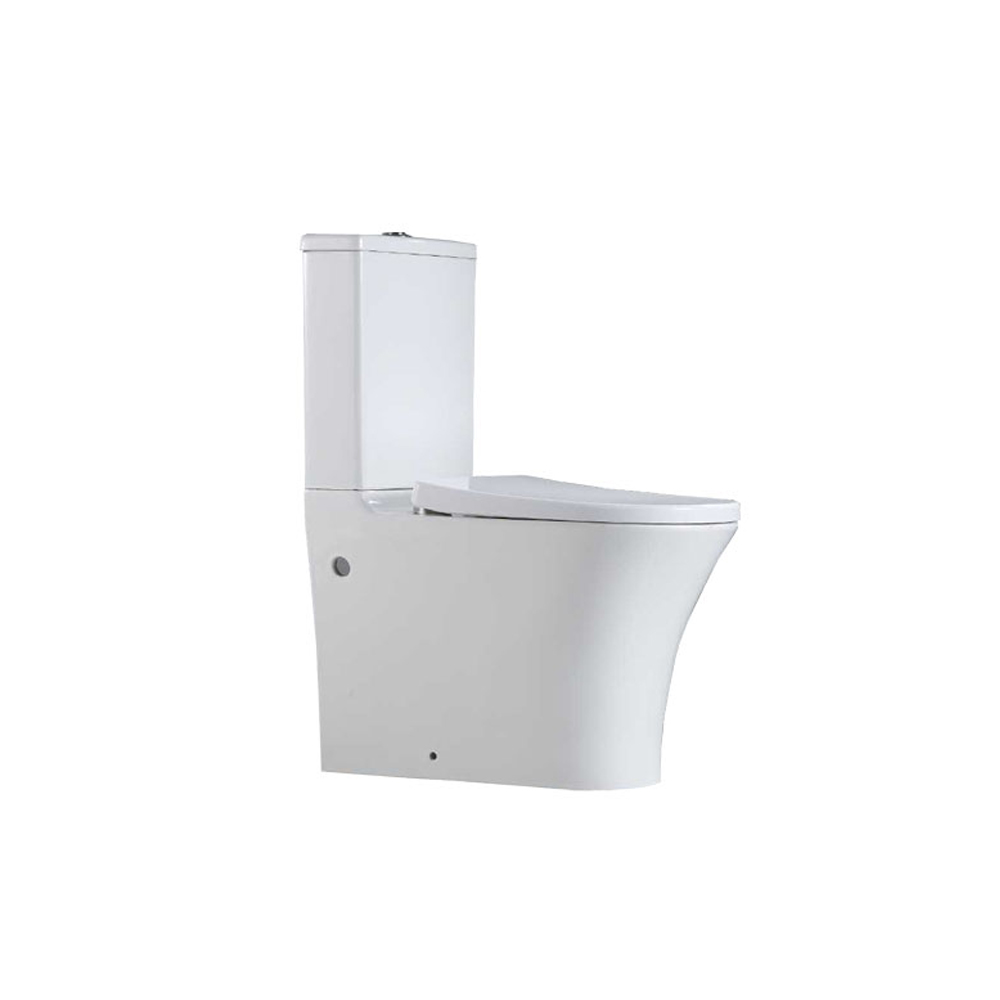
Of all the forms in the CT series, the CT-005 is the most kinetic — the pan body cinches dramatically at the waist, creating a concave mid-section that gives the unit genuine sculptural tension. The effect is of a form under gentle compression, the ceramic caught at the precise moment before it exhales back into fullness. Paired with what appears to be an integrated smart bidet seat and the familiar sharp-edged rectangular cistern, this is the CT series' most premium specification.
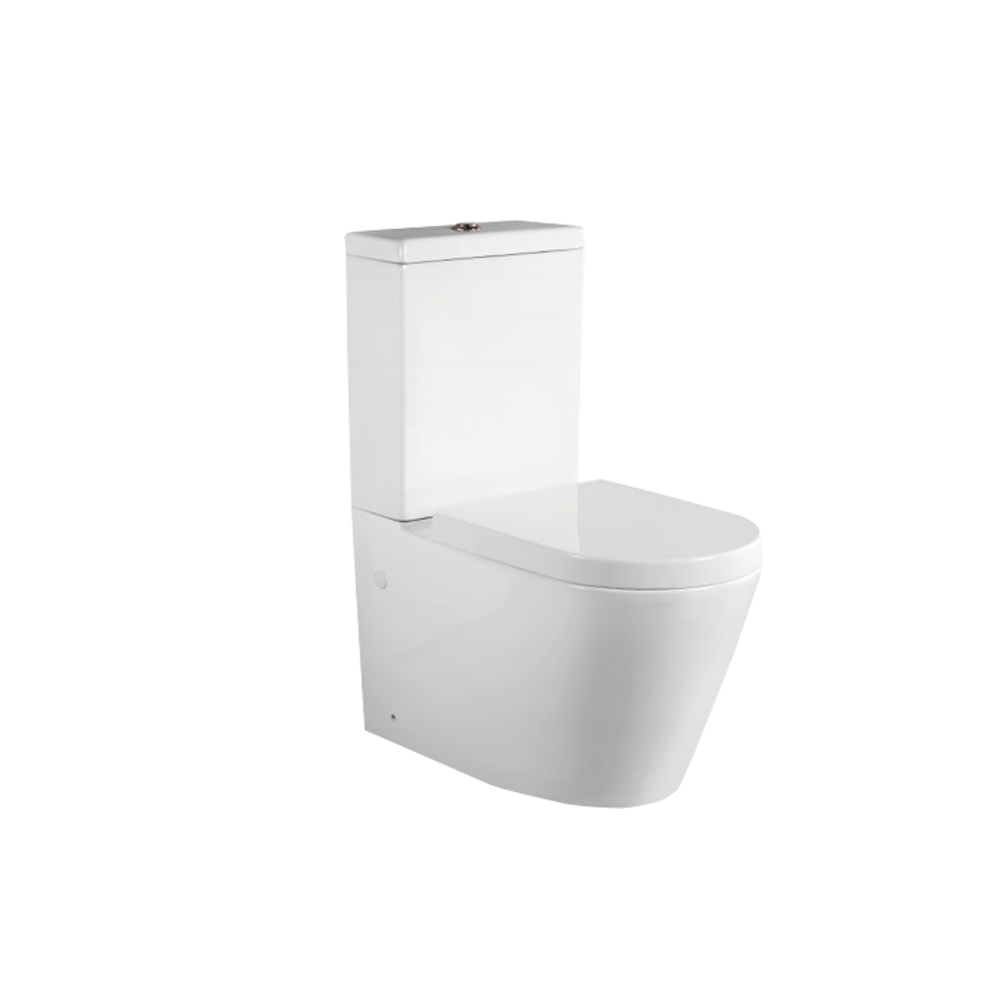
Clean geometry, confident form — the SHUIDAO CT-001 pairs a squared-profile cistern with a smoothly rounded rimless bowl in a back-to-wall close-coupled configuration that reads as simultaneously contemporary and resolved. The contrast between the cistern's sharp rectangular lines and the pan's organic curves is deliberate — an architectural dialogue between precision and softness that gives this toilet a visual identity well above its price point.
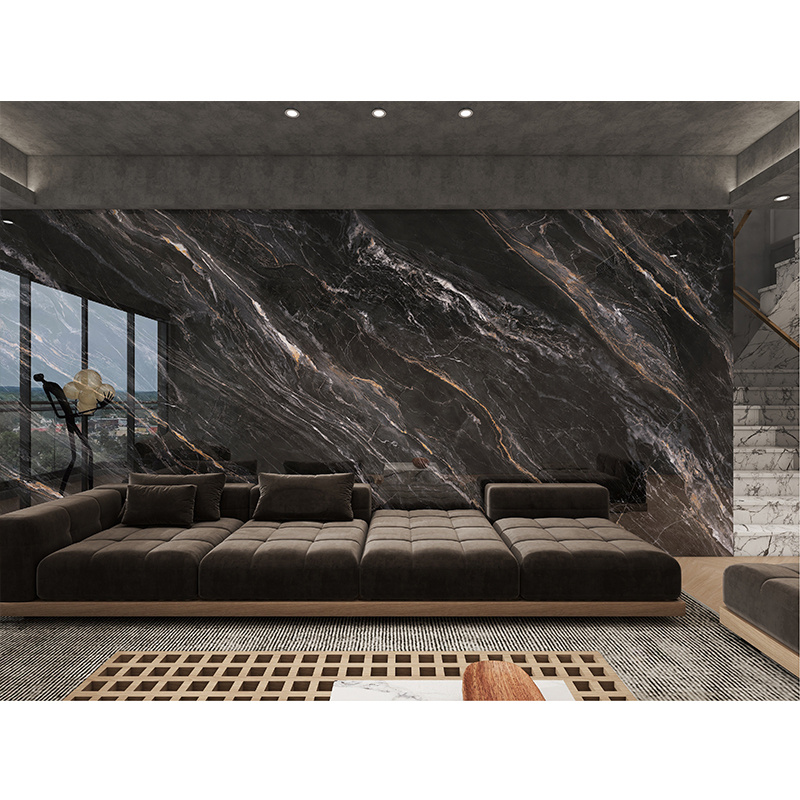
There is a specific register of luxury that only dark materials can occupy — the gravity, the drama, the sense that a room has mass and intention. The SD-AGWP034 in Black Gold Vein delivers that register as a full living room feature wall: deep black ground, broad diagonal white crystalline veins sweeping from corner to corner like frozen continental movement, rose-gold accent veins tracing finer lines through the darkness. Under the recessed downlights visible in this render, the high-gloss black surface catches each light source as a sharp specular highlight — so the wall is simultaneously the darkest and the most luminous surface in the room, a paradox that only polished dark stone (or a very good panel system that mimics it) can achieve. The white marble staircase on the right and the raw concrete ceiling above do not compete with this wall — they frame it, setting the black marble as the centrepiece of an interior that understands material contrast as a design language.
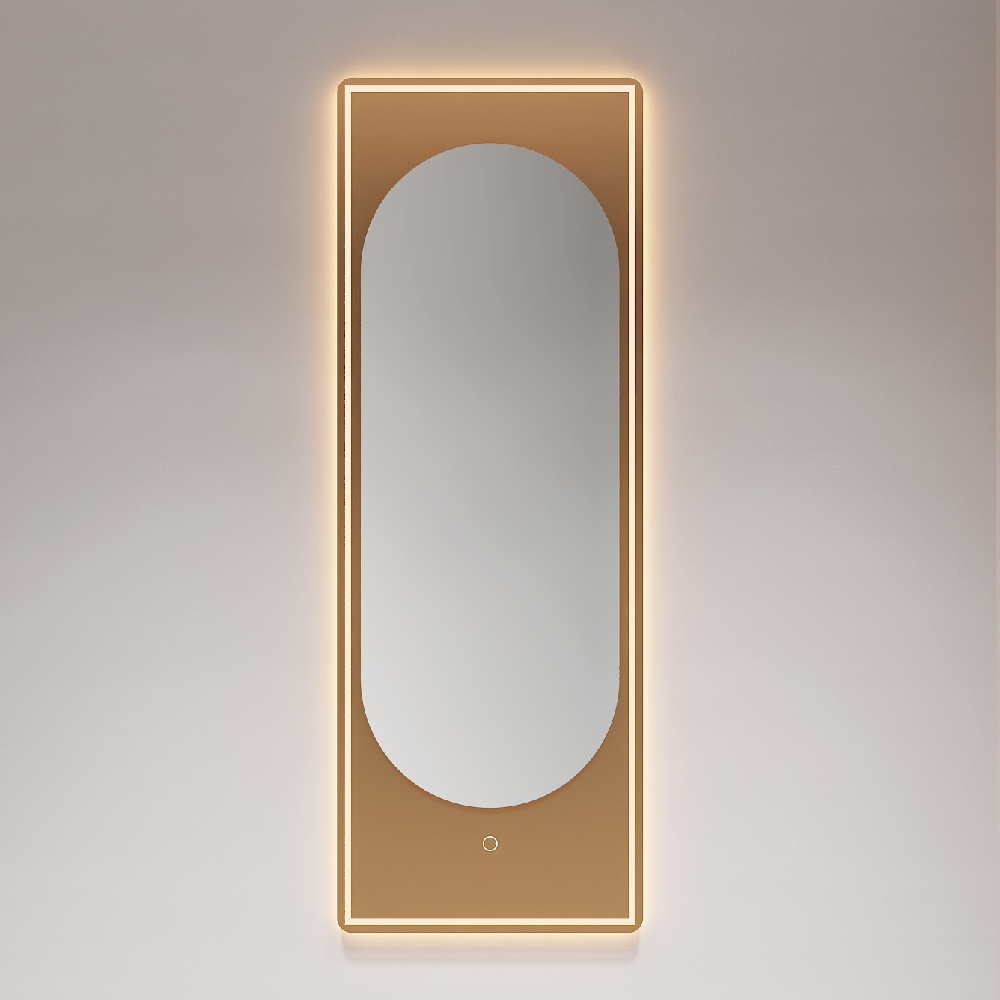
Architecture distilled to a single plane — the SHUIDAO arch-cutout mirror transforms the classical doorway arch into a wall-hung decorative mirror of rare originality. A tall rectangular brushed gold panel is pierced by a narrow arched mirror cutout, the entire assembly edged in a warm LED halo that glows from behind the gold surround and casts amber light across the stone wall. Part mirror, part sculpture, entirely deliberate.
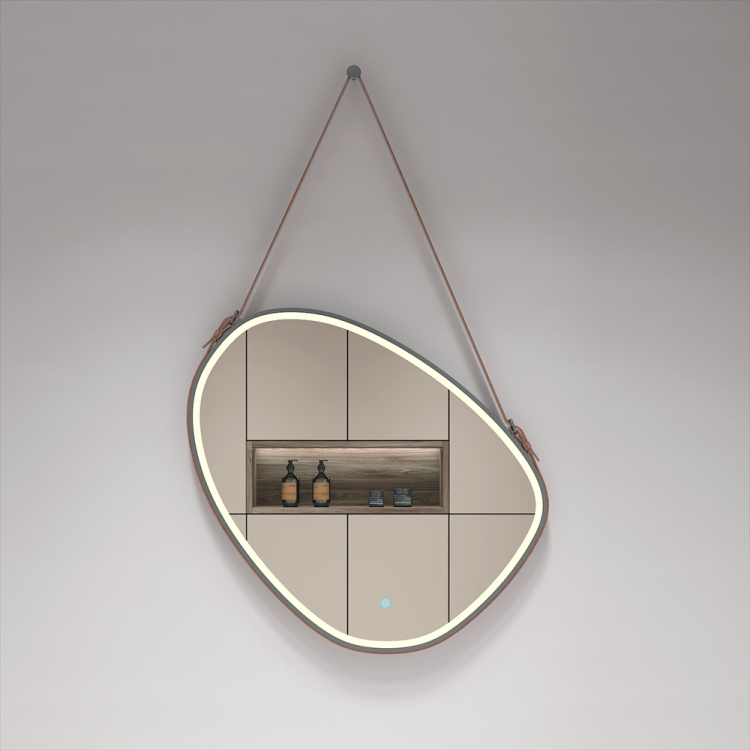
Suspended like a jewel on a leather cord — the SHUIDAO leather-strap oval mirror brings the warmth of artisan craft to the bathroom wall. A brushed gold oval frame hangs freely from a single cognac leather strap, its inner LED halo casting cool white light across the mirror face while the warm metal and supple leather speak a language of relaxed, collected luxury. A mirror that looks equally at home in a Japandi bathroom, a Nordic loft, or a boutique hotel vanity alcove.
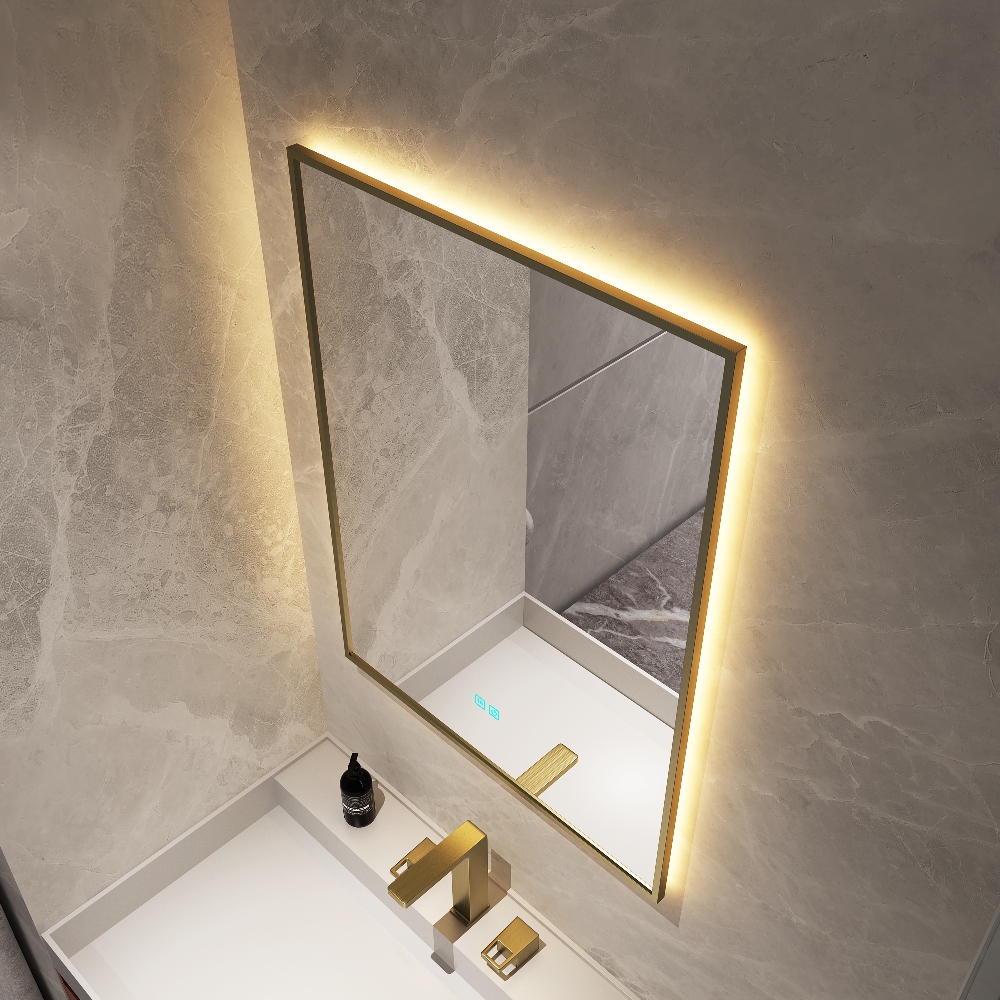
Restraint as luxury — the SHUIDAO brushed gold rectangle LED mirror proves that the most enduring design decisions are often the simplest. A slim brushed gold frame contains a large portrait-format mirror, its full-perimeter warm amber halo washing outward across the surrounding stone wall in a soft corona that transforms the entire vanity wall into a glowing architectural feature. Paired with a brushed gold waterfall faucet below, the composition achieves a total material harmony that feels considered without effort.
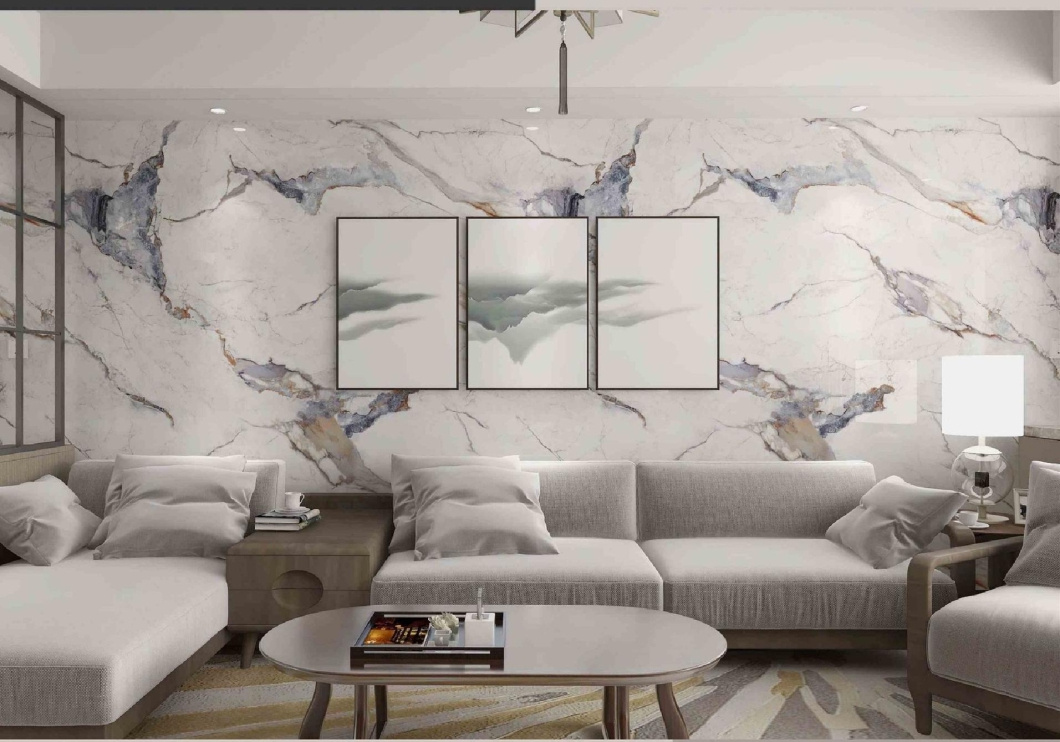
There is a moment in Chinese ink painting where the ink spreads into wet paper and pools in formations that no brush could have planned — dark clouds gathering, mountain shadows dissolving into mist. The SD-AGWP034 Calacatta Viola colourway reproduces that moment in stone: slate-blue mineral formations pooling across a white crystalline ground, amber-gold veins tracing their paths through the blue like rivers through mountain terrain, fine grey fracture lines mapping the geological stress of a surface that looks as much painted as quarried. Hung with three Chinese ink wash landscape paintings — clouds, mist, distance — this living room wall is making an explicit conversation between the stone on the wall and the art on the stone: both are depictions of the same natural world, one rendered in pigment, one grown in the earth over a million years. The SD-AGWP034 Calacatta Viola is the correct panel for an interior that understands this conversation.
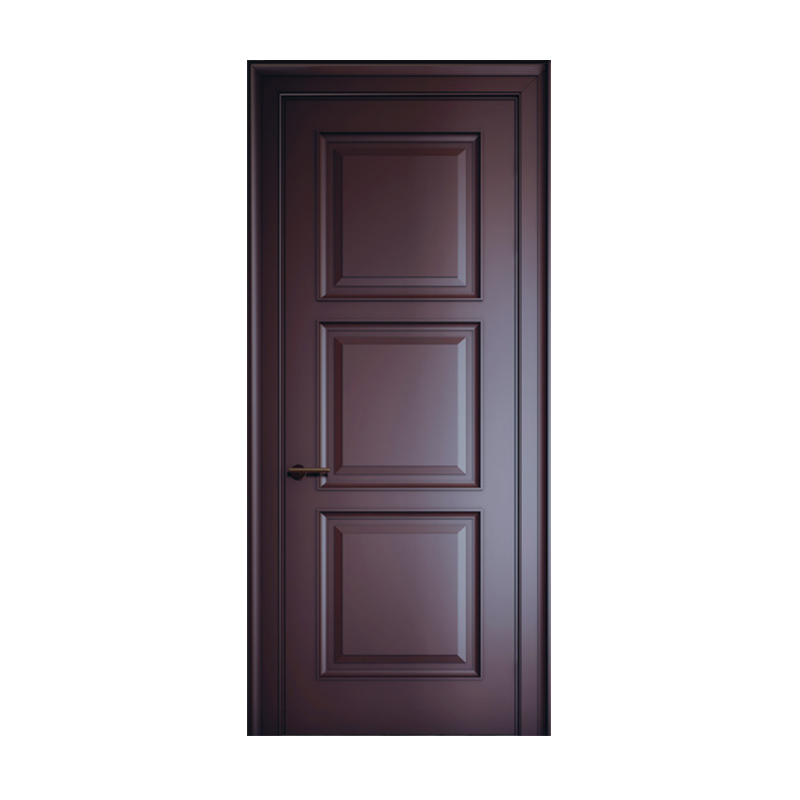
The D8647 is the D8645's darker, more commanding counterpart — the same three-panel classical composition, the same double-stepped moulding profile, but dressed in a deep burgundy-mahogany that changes the door's entire register. Where the D8645's cool grey reads as restrained and contemporary, the D8647's dark red-brown speaks of library walls, cognac leather, and rooms that take themselves seriously. The three panels — tall upper, medium horizontal, wide lower — are framed in the same moulding hierarchy, but here the depth of the colour causes the shadow lines between panel and moulding to read with particular sharpness, giving the door a sculptural quality that lighter finishes simply cannot match. The antique bronze lever handle is the exact right hardware choice: its dark, aged metal disappears into the door's deep ground and re-emerges as a material accent rather than a contrast.
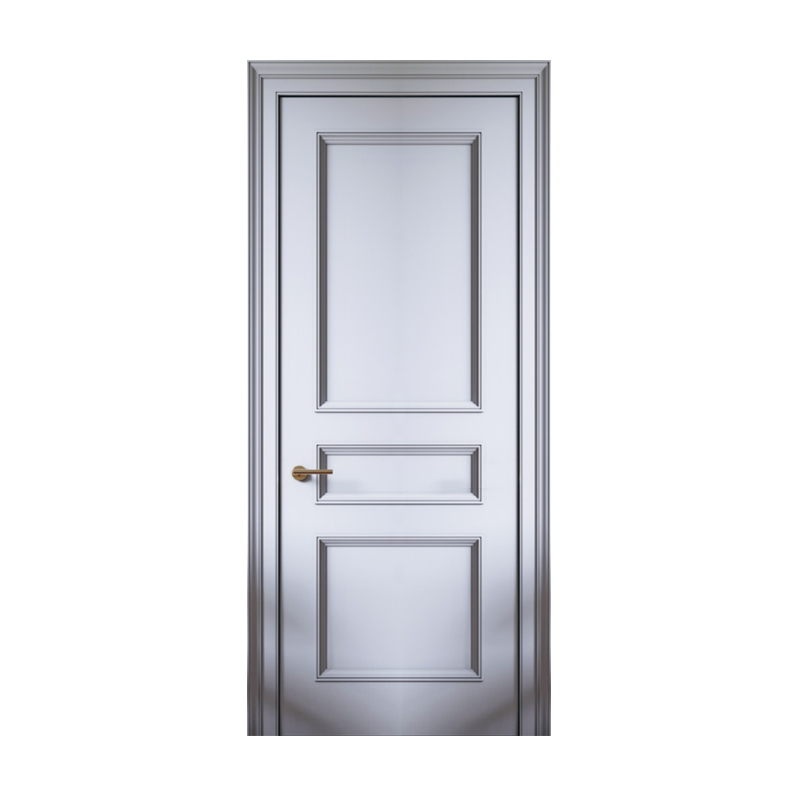
A door that knows exactly what it is. The D8645 speaks the language of European classical interior architecture — three raised panels arranged in the canonical tall-wide-wide proportion, each panel framed by a double-stepped moulding profile that catches light across two distinct relief planes, the whole composition set within a matching architrave frame that carries the same moulding vocabulary from door to wall. The finish is a cool, sophisticated light grey — neither stark white nor warm ivory, but the restrained grey-white that reads as deliberate and current in the context of contemporary classical interiors. The antique brass lever handle introduces the only warm metallic accent, its aged finish providing a considered counterpoint to the cool grey ground.
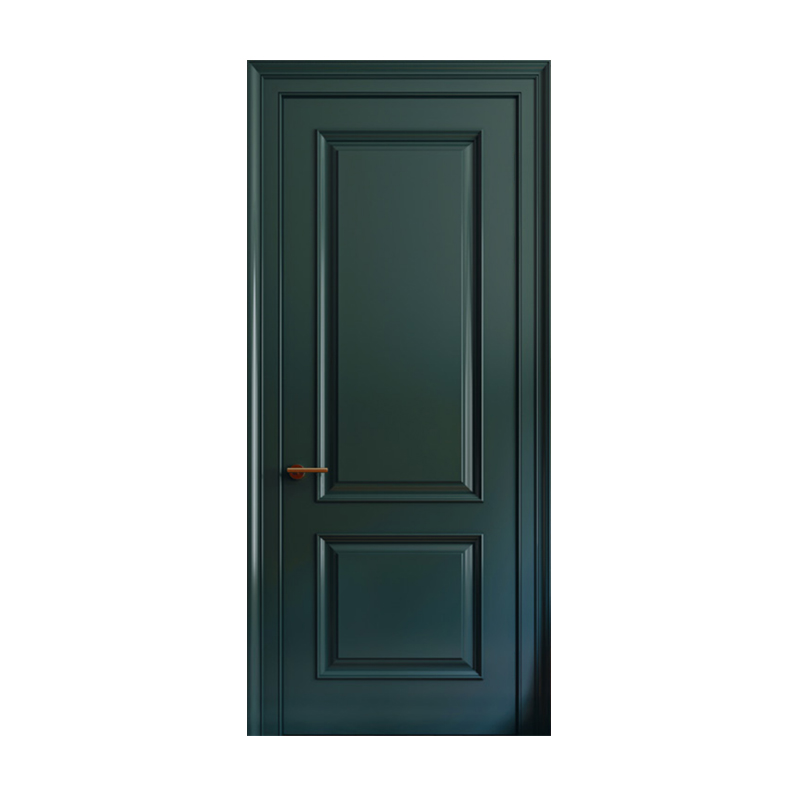
There is a moment in interior design when a room stops being decorated and starts being intentional — and it often begins with the door. The D8649 makes that case with complete confidence. Its deep forest green finish — the specific green of lacquered English estate joinery, of Parisian apartment doors glimpsed from a courtyard, of rooms that feel genuinely private — transforms the two-panel classical form from a background element into an active design statement. The double-step moulding profile here operates without any gold accent line; the finish's own depth is sufficient, the shadow between moulding levels reading as a dark, crisp line that defines the geometry entirely through relief and recession. The antique bronze lever handle — darker and more reddish-toned than the brushed brass of the D8646 and D8648 — was chosen to hold its own against the deep green ground rather than float above it.